The packaging and manufacturing industries have undergone a remarkable transformation over the past century, with automation becoming an integral part of production processes across the globe. From small-scale bottling operations to massive beverage production facilities, the demand for efficient, accurate, and hygienic packaging solutions has never been greater. Modern manufacturing environments require equipment that can maintain consistent quality while increasing output to meet growing consumer demands for bottled products including water, beverages, pharmaceuticals, and household goods.
Bottle filling machines operate on the fundamental principle of automatically dispensing a predetermined quantity of liquid or semi-liquid product into containers through precisely controlled valves or nozzles, using various technologies such as gravity, pressure, vacuum, or volumetric displacement to achieve accurate and efficient filling. These sophisticated systems are designed to replace manual labor while maintaining high standards of accuracy, hygiene, and speed, making them indispensable equipment in modern packaging operations.
Understanding the working principles of filling machines is essential for anyone involved in the packaging industry, whether you are a production manager, equipment procurement specialist, or business owner looking to optimize your production processes. This comprehensive guide will explore the various types of Water Filling Machine systems available today, examine their components and mechanisms, and provide insights into how these machines achieve remarkable precision and efficiency. By gaining a deeper understanding of these technologies, manufacturers can make informed decisions about equipment selection and operation, ultimately leading to improved productivity and product quality.
Table of Contents
Introduction to Bottle Filling Machines
Components and Mechanisms of Bottle Filling Machines
Step-by-Step Process of Bottle Filling
Types of Bottle Filling Machines
Advantages and Applications of Bottle Filling Machines
Conclusion
Introduction to Bottle Filling Machines
Bottle filling machines are automated packaging equipment designed to fill containers with precise volumes of liquid products, utilizing various filling technologies controlled by programmable logic controllers to ensure accuracy, efficiency, and consistency in high-volume production environments. These machines have evolved significantly from manual filling operations to become sophisticated systems capable of processing thousands of bottles per hour while maintaining exceptional accuracy and hygiene standards.
The modern Water Filling Machine represents a convergence of mechanical engineering, fluid dynamics, and automation technology. At their core, these machines are designed to eliminate the variability and inefficiency inherent in manual filling processes. While manual filling is subject to human error, fatigue, and inconsistency, automated filling machines deliver uniform results with minimal deviation from target fill volumes. This consistency is crucial in industries where product quality and regulatory compliance are paramount, such as in the pharmaceutical, food and beverage, and chemical sectors.
The development of filling machines has been driven by several key factors in the manufacturing landscape. First, the increasing scale of production operations has made manual filling impractical for large-volume applications. A single automatic water bottle filling machine can replace dozens of manual operators while delivering superior accuracy and reducing labor costs. Second, consumer expectations for product quality and consistency have risen, requiring more precise filling control than manual methods can achieve. Third, regulatory requirements in many industries mandate strict control over product volumes and hygiene standards, necessitating the use of automated equipment with documented processes and quality controls.
The drinking water filling machine market has particularly benefited from these technological advancements. As demand for bottled water has grown globally, manufacturers have needed equipment that can handle high-speed production while maintaining the purity and quality that consumers expect. Modern water filling machines are designed with sanitary construction features, Clean-In-Place (CIP) capabilities, and closed system designs that minimize the risk of contamination throughout the filling process.
The evolution of filling machine technology has also been influenced by the diverse range of products that need to be packaged. From thin, free-flowing liquids like water and spirits to viscous products like sauces, creams, and syrups, different products require different filling approaches. This has led to the development of specialized filling technologies optimized for specific product characteristics. Understanding these differences is crucial for selecting the right equipment for a given application and achieving optimal results.
Components and Mechanisms of Bottle Filling Machines
Bottle filling machines consist of several integrated components including product supply systems, filling valves with precise control mechanisms, bottle handling systems, conveyor arrangements, capping units, electronic control systems with PLCs, and various sensors that work together to achieve automated filling operations. Each component plays a critical role in ensuring the accuracy, speed, and reliability of the filling process, and understanding their functions is essential for proper machine operation and maintenance.
The product supply system is the foundation of any Water Filling Machine and typically includes a bulk storage tank or hopper, transfer pumps, and piping that delivers the product to the filling valves. For applications requiring temperature control, the supply system may include heating or cooling jackets to maintain product viscosity. In the case of carbonated beverages, the system must maintain appropriate pressure levels to preserve carbonation. The supply system also includes filtration and sterilization equipment where required, particularly important for drinking water filling machines where product purity is paramount.
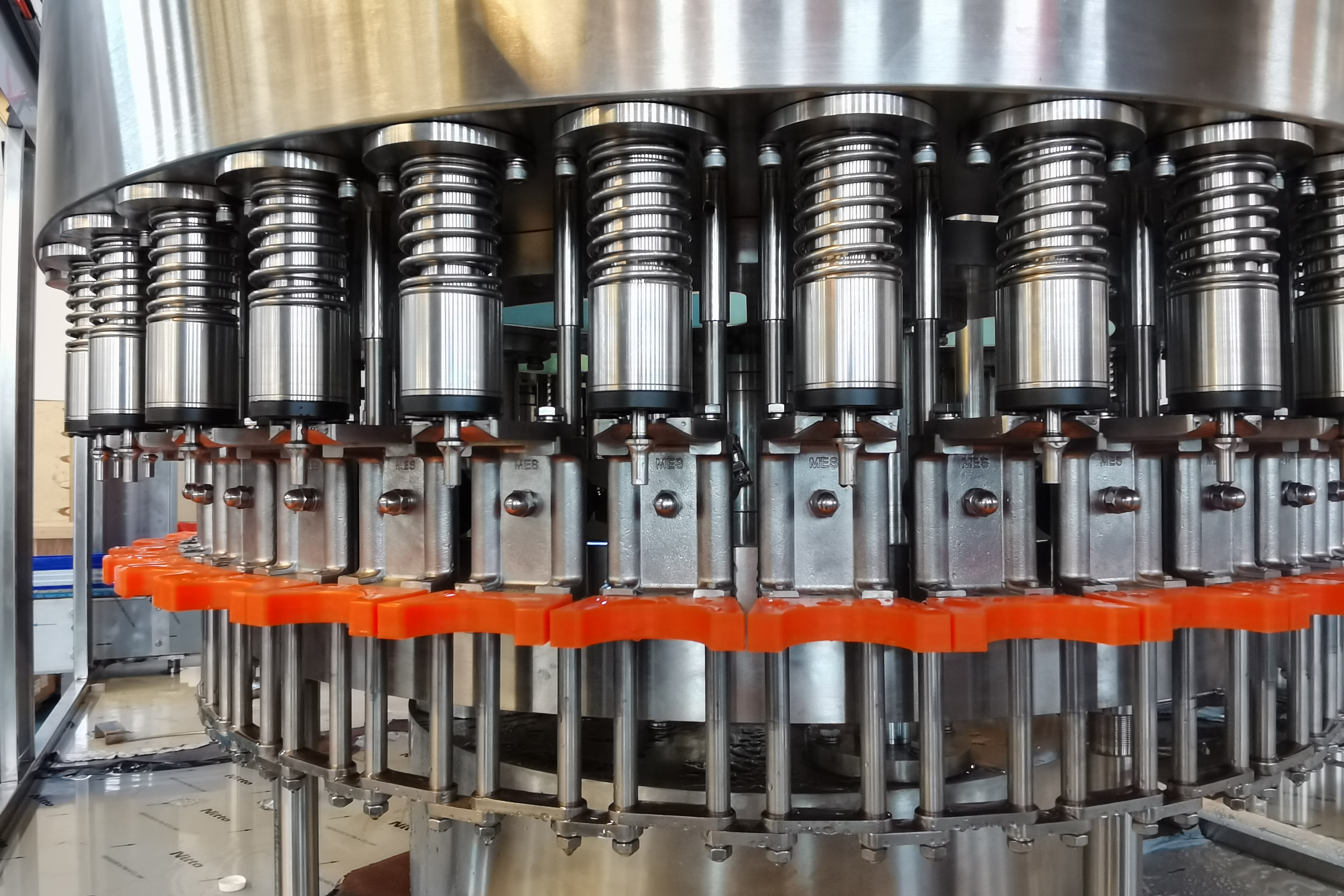
The filling valve assembly represents the heart of the filling machine and is available in various designs depending on the filling technology employed. These valves must provide precise control over product flow, starting and stopping quickly and reliably while preventing dripping or overflow. Advanced water bottle filling machines feature servo-controlled valves that can adjust flow rates dynamically based on product characteristics and bottle geometry. The number of valves determines the machine’s capacity, with high-speed production lines often featuring dozens or even hundreds of filling valves operating simultaneously.
Bottle handling mechanisms ensure smooth, reliable transport of containers through the filling process. In modern 3 in 1 water filling machines that integrate rinsing, filling, and capping, sophisticated star wheels, timing screws, and gripping mechanisms coordinate bottle movement between different processing stations. These mechanisms must be precisely synchronized to prevent bottle damage, ensure proper positioning under filling valves, and maintain overall production speed. The design of these handling systems varies significantly depending on bottle type, size, and production requirements.
The conveyor system connects different stages of the packaging process and typically includes accumulation sections to handle temporary variations in line speed. In automatic water bottle filling machine installations, the conveyor must maintain proper bottle spacing, orientation, and speed to ensure smooth feeding into and out of the filling machine. Advanced conveyor systems may include integrated inspection points, rejection mechanisms, and buffering capabilities to maximize overall line efficiency.
The control system represents the brain of the filling machine and typically consists of a Programmable Logic Controller (PLC) that coordinates all machine functions. The PLC receives input from various sensors monitoring bottle presence, fill levels, valve operation, and other critical parameters. Based on this input and pre-programmed logic, the PLC controls actuators, motors, and valves to execute the filling process precisely. Modern Water Filling Machine systems include Human-Machine Interfaces (HMIs) that provide operators with real-time production data, allow parameter adjustments, and facilitate troubleshooting.
Sensors and instrumentation play crucial roles in ensuring proper operation and quality control. These may include level sensors in product tanks, pressure sensors in pneumatic systems, optical sensors for bottle detection, flow meters for precise volume measurement, and various limit switches and encoders for position feedback. Advanced automatic water bottle filling machine installations may also incorporate vision inspection systems to verify fill levels, cap placement, and label alignment, providing comprehensive quality assurance.
Step-by-Step Process of Bottle Filling
The bottle filling process follows a systematic sequence beginning with bottle preparation and loading, followed by positioning under filling valves, product dispensing through controlled valve operation, post-fill inspection, and finally transfer to downstream packaging equipment. Each step must be precisely controlled and timed to ensure consistent results while maintaining high production efficiency in modern Water Filling Machine operations.
The process typically begins with bottle preparation, which may include rinsing, sterilization, and drying depending on product requirements. In drinking water filling machines, bottles often pass through a dedicated rinsing station where they are inverted and sprayed with purified water or sanitizing solution. This rinsing process removes contaminants and prepares bottles for filling. For products requiring higher hygiene standards, such as pharmaceuticals or aseptic beverages, more extensive sterilization procedures may be employed, including chemical sterilization, ultraviolet treatment, or dry heat methods.
Following preparation, bottles are conveyed to the filling station where they must be accurately positioned under the appropriate filling valve. In rotary Water Filling Machine designs, a rotating carousel with multiple filling valves moves bottles continuously through the filling zone. Each bottle must be properly centered and aligned with the filling nozzle to ensure accurate filling and prevent spillage. Advanced systems use bottle neck holding technology, which grips the bottle by the neck rather than the body, allowing for more consistent handling across different bottle types and reducing the risk of container damage.
The actual filling operation begins when the filling valve engages with the bottle. Different water bottle filling machine technologies employ various methods to initiate and control product flow. In gravity filling systems, a simple mechanical linkage opens the valve, allowing product to flow into the bottle under gravity. Pressure filling systems use compressed air or gas to force product into containers, maintaining appropriate pressure differentials to prevent foaming in carbonated products. Vacuum filling systems create a partial vacuum in the bottle to draw product in, particularly useful for viscous products or when filling narrow-necked containers.
During filling, various control mechanisms ensure precise volume measurement and prevent overfilling. Modern 3 in 1 water filling machines typically incorporate flow meters that measure the exact volume dispensed and trigger valve closure when the target volume is reached. Alternative methods include timed filling, where fill volume is determined by the duration of valve operation, and level-based filling, where sensors detect when the product reaches a predetermined level in the bottle. The choice of method depends on product characteristics, required accuracy, and production speed.
After filling is complete, bottles may undergo inspection before proceeding to capping. Fill level verification is a critical quality control step that ensures each container contains the proper amount of product. Some drinking water filling machine systems incorporate checkweighers that measure bottle weight to detect fill variations, while others use optical sensors or X-ray inspection to verify fill levels. Bottles that fail inspection are automatically rejected from the line, preventing out-of-spec products from reaching consumers.
The final stage in the filling process involves transferring filled bottles to capping equipment. In integrated Water Filling Machine systems that include capping capability, this transfer may occur within the same machine frame, with bottles moving from filling to capping stations via star wheels or timing screws. For separate filling and capping machines, a conveyor system transports bottles between the two stations. Regardless of the configuration, proper bottle spacing and orientation are essential to ensure reliable capping and prevent bottle damage or spillage.
Types of Bottle Filling Machines
Bottle filling machines are classified into several categories including gravity filling machines, pressure filling machines, vacuum filling machines, piston filling machines, overflow filling machines, and net weight filling machines, each designed for specific product characteristics and production requirements. Understanding the differences between these types is crucial for selecting the right equipment for a given application and achieving optimal filling performance.
Gravity filling machines represent the simplest and most common type of Water Filling Machine, particularly suited for free-flowing, non-carbonated liquids such as water, juices, and other still beverages. In these systems, the product is stored in an elevated tank, and liquid flows into bottles through filling valves under the force of gravity. The height of the tank above the filling valves determines the filling pressure and speed. Gravity filling is gentle on products and minimizes foaming, making it ideal for applications where product integrity is paramount. Modern gravity filling machines often incorporate electronic flow meters for enhanced accuracy and can achieve speeds of several thousand bottles per hour.
Pressure filling machines are specifically designed for carbonated beverages and products that require precise pressure control during filling. The automatic water bottle filling machine for carbonated products must maintain appropriate pressure levels to preserve carbonation and prevent foaming or excessive CO2 loss. These systems typically operate by pressurizing the bottle with carbon dioxide before filling, then introducing the product under counterpressure. The equal pressure between the bottle and the product tank prevents foaming and allows for fast filling while maintaining carbonation levels. Pressure filling machines are essential for producing carbonated soft drinks, sparkling water, beer, and other carbonated beverages.
Vacuum filling machines create a partial vacuum inside the bottle to draw product in, making them particularly suitable for viscous products, narrow-necked containers, or applications where foaming must be minimized. The vacuum principle helps ensure complete filling without air pockets and can be adjusted based on product viscosity. These machines are commonly used for filling oils, syrups, sauces, and other thick liquids. In some configurations, vacuum filling is combined with gravity or pressure filling to optimize the process for specific products. The drinking water filling machine may also incorporate vacuum principles for special applications such as filling mineral water with precise mineral content.
Piston filling machines use positive displacement to measure and dispense precise volumes of product. A piston within a cylinder draws product from a supply tank during the intake stroke and then dispenses it during the delivery stroke. The volume dispensed is determined by the piston stroke length and cylinder diameter, making these systems highly accurate and easily adjustable for different fill volumes. Piston fillers are particularly suitable for thick products, chunky products with particulates, and applications requiring high precision. These machines can handle a wide range of viscosities and are commonly found in the food, pharmaceutical, and chemical industries.
Overflow filling machines are designed to fill bottles to a consistent level regardless of minor variations in bottle volume. In this system, product is pumped into the bottle until it reaches a predetermined level, at which point excess product overflows through a return channel back to the supply tank. This ensures that all bottles appear equally full when viewed by consumers, which is particularly important for clear products in transparent containers. While not as volumetrically precise as other methods, overflow filling provides excellent visual consistency and is commonly used for products where fill level uniformity is more important than exact volume.
Net weight filling machines weigh each bottle before and after filling to ensure precise product dispensing. These systems are particularly useful when high accuracy is required or when working with products of variable density. The 3 in 1 water filling machine may incorporate net weighing for specialized applications where volumetric accuracy is insufficient. Net weight fillers are commonly used in the chemical industry for hazardous materials, in pharmaceutical applications where precise dosing is critical, and in other situations where regulatory requirements mandate strict weight control.
Advantages and Applications of Bottle Filling Machines
Bottle filling machines offer numerous advantages including increased production efficiency, improved product consistency and quality, reduced labor costs, enhanced hygiene and safety, accurate volume control, data collection capabilities, and flexibility to handle various container types and products across multiple industries. These benefits make automated filling equipment an essential investment for manufacturers seeking to improve their packaging operations and remain competitive in today’s demanding market environment.
The primary advantage of implementing a Water Filling Machine is the dramatic increase in production efficiency compared to manual filling methods. While manual operators can typically fill only a few hundred bottles per hour with significant fatigue and quality variation, modern automatic water bottle filling machine systems can process thousands of bottles per hour consistently with minimal human intervention. This increased throughput allows manufacturers to meet growing demand without proportionally increasing their workforce, resulting in significant cost savings and improved profitability.
Product consistency and quality represent another crucial benefit of automated filling systems. Manual filling is subject to human error, fatigue, and variation, leading to inconsistent fill volumes and product quality. In contrast, a drinking water filling machine delivers uniform results with minimal deviation from target specifications. This consistency is essential for regulatory compliance in many industries and ensures that customers receive products of uniform quality, building brand trust and loyalty. Advanced systems also incorporate quality control features such as fill level verification, weight checking, and container inspection, further enhancing product quality assurance.
Hygiene and safety improvements are particularly important in food, beverage, and pharmaceutical applications. Water Filling Machine systems are designed with sanitary construction features that minimize contamination risks and facilitate cleaning. Closed system designs prevent product exposure to the environment, while Clean-In-Place (CIP) capabilities allow automated cleaning and sterilization between production runs. These features are essential for maintaining product purity and meeting regulatory requirements in industries where contamination can have serious consequences.
The accuracy and precision of automated filling machines provide significant economic benefits through reduced product giveaway. Even small overfills can add up to substantial costs when producing large volumes. An automatic water bottle filling machine with precise volumetric control can reduce giveaway to a fraction of what manual methods typically produce, resulting in direct material savings. Similarly, precise underfill control ensures compliance with weight and volume regulations, preventing costly product recalls and regulatory penalties.
Data collection and traceability capabilities represent another significant advantage of modern filling machines. Advanced 3 in 1 water filling machine systems incorporate sophisticated control and monitoring systems that collect detailed production data, including fill volumes, production speeds, downtime, and quality parameters. This data can be used for performance optimization, quality tracking, regulatory reporting, and predictive maintenance planning. The ability to trace production batches through specific equipment and time periods enhances quality management and facilitates rapid response to any issues that may arise.
Flexibility is increasingly important as manufacturers seek to adapt to changing market demands and product portfolios. Modern Water Filling Machine systems can be configured to handle various bottle sizes, shapes, and materials with minimal changeover time. Some machines can even handle multiple product types on the same line, allowing manufacturers to produce different SKUs on the same equipment. This flexibility enables companies to respond quickly to market trends and consumer preferences without requiring separate production lines for each product variation.
The applications of bottle filling machines span numerous industries and product types:
Beverage Industry: Water, soft drinks, juices, sports drinks, alcoholic beverages, dairy drinks, and other liquid beverages
Food Industry: Sauces, oils, syrups, dressings, honey, liquid eggs, and other food products
Pharmaceutical Industry: Liquid medications, syrups, suspensions, eye drops, and other liquid pharmaceutical products
Chemical Industry: Industrial chemicals, solvents, lubricants, cleaning solutions, and other liquid chemical products
Cosmetics Industry: Shampoos, lotions, creams, liquid soaps, perfumes, and other personal care products
Household Products: Detergents, cleaners, disinfectants, and other liquid household chemicals
Competitor Perspectives on Bottle Filling Machines
Accutek Packaging Equipment explains that filling machines are important equipment in any packaging unit that promotes quality and efficiency of the overall product. According to Accutek, fillers can be classified into different categories based on the degree of automation and technologies used, including semi-automatic and fully automatic systems. They describe different types of filling machines used to accommodate different product types such as liquid, gas, and paste. Accutek notes that gas fillers use pumps known as booster pumps to create pressure needed to fill products inside bottles, with boosters similar to gas compressors. They mention that liquid filling machines can be of two types, ordinary and pressure, where ordinary fillers use gravity while pressure liquid fillers use atmospheric pressure including equal air pressure and high-pressure filling. Accutek also states that paste fillers use complicated methods to measure and control filling quantity since products can be highly viscous.
TECH-LONG describes the basic principle behind a bottle filling machine as automating the process of filling bottles with a predetermined quantity of liquid or substance. According to TECH-LONG, these machines are designed to optimize efficiency, accuracy, and hygiene, ensuring that the production process is seamless and cost-effective. They emphasize that one of the primary components is the filling valve which controls the flow of liquid into bottles, with different types employed based on product viscosity. TECH-LONG offers gravity filling valves that rely on gravity from an elevated tank ensuring accurate and consistent fill levels, commonly used for still beverages. They describe pressure filling valves that utilize pressure to force liquid into bottles, particularly suited for carbonated beverages to maintain carbonation levels. TECH-LONG also mentions vacuum filling valves that create a vacuum inside the bottle drawing liquid in, commonly used for high viscosity products like sauces, oils, or lotions. They note that bottle filling machines also incorporate bottle feeding systems, conveyors, capping machines, and labeling systems.
Conclusion
The working principles of filling machines represent a fascinating intersection of fluid dynamics, mechanical engineering, and automation technology that has revolutionized the packaging industry. From simple gravity-based systems to sophisticated multi-process 3 in 1 water filling machines, these technologies enable manufacturers to achieve levels of efficiency, accuracy, and consistency that would be impossible with manual methods. As consumer demands for quality and variety continue to grow, the importance of understanding and implementing the right filling technology becomes increasingly critical for business success.
For manufacturers and production professionals, the key takeaways are clear: automated filling systems provide substantial benefits across multiple dimensions of operation. The drinking water filling machine and other filling technologies offer improved efficiency, product quality, safety, and cost-effectiveness that directly impact bottom-line results. By carefully evaluating product characteristics, production requirements, and quality standards, manufacturers can select the appropriate Water Filling Machine technology to optimize their operations and gain competitive advantage in their respective markets.
Looking forward, the evolution of filling machine technology will continue at an accelerated pace, driven by advances in robotics, artificial intelligence, and Industry 4.0 concepts. The next generation of automatic water bottle filling machine systems will likely incorporate even greater levels of automation, connectivity, and smart features that further enhance performance while reducing operational complexity. Manufacturers who stay informed about these developments and strategically invest in appropriate technology will be well-positioned to thrive in the increasingly competitive global marketplace.
Whether you are establishing a new production facility or upgrading existing operations, understanding the working principles of filling machines is essential for making informed decisions about equipment investment and operation. By combining this knowledge with proper implementation and maintenance practices, manufacturers can achieve optimal performance from their Water Filling Machine systems and deliver high-quality products that meet and exceed customer expectations in today’s demanding business environment.

 English


