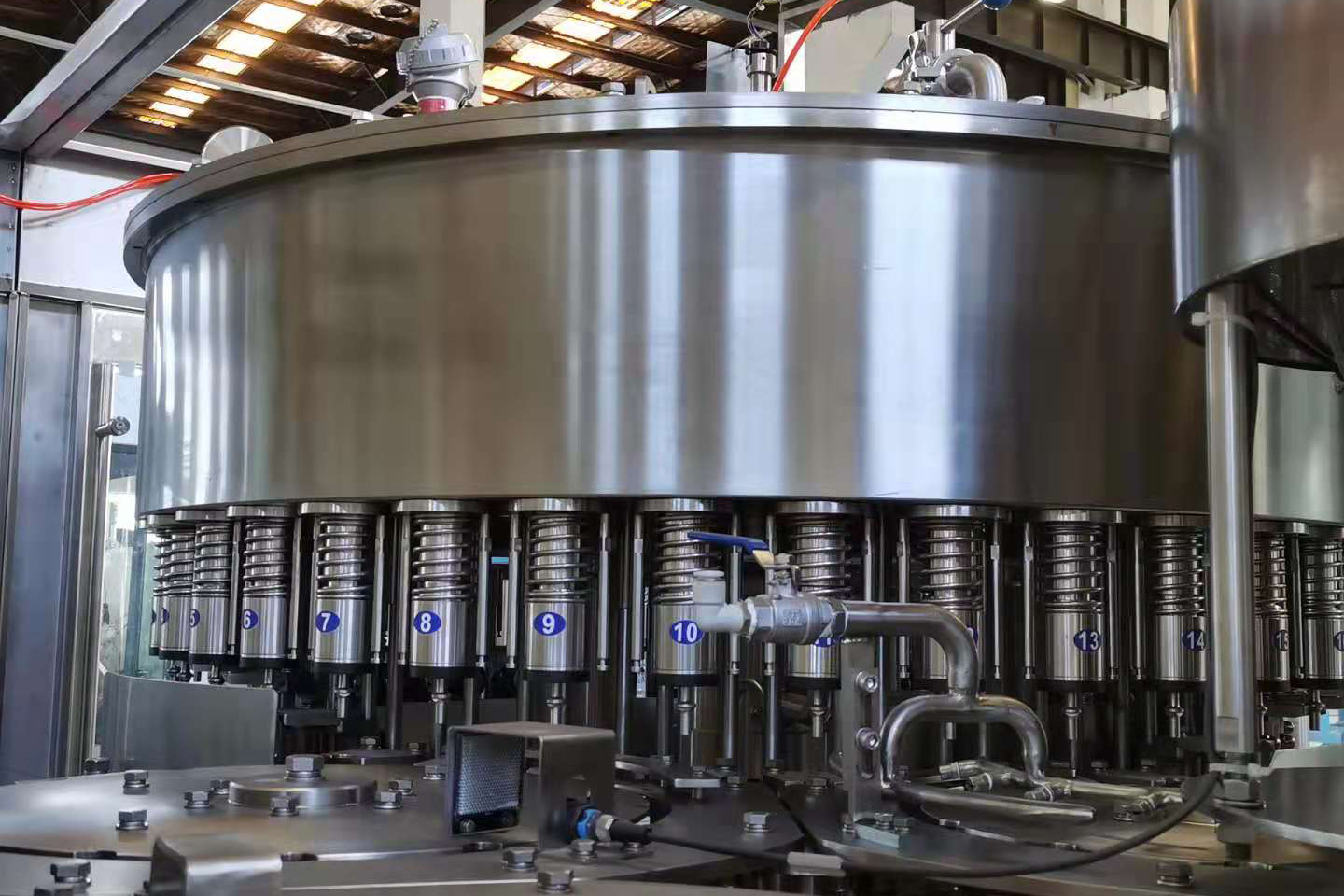
The global beverage industry has experienced unprecedented growth over the past few decades, with bottled water emerging as one of the fastest-growing segments in the market. As consumer demand for safe, convenient, and high-quality drinking water continues to rise, manufacturers face increasing pressure to produce bottled water efficiently while maintaining the highest standards of hygiene and product consistency. The modern bottled water industry has evolved from manual filling processes to sophisticated automated systems that can handle thousands of bottles per hour with remarkable precision and reliability.
A water filling machine is specialized automated equipment designed to efficiently and accurately fill bottles, containers, and other packaging with water or various liquid products, while maintaining precise volume control, ensuring hygiene standards, and significantly increasing production efficiency compared to manual filling methods. These machines serve as the cornerstone of modern bottling operations, enabling manufacturers to meet growing market demands while maintaining product quality and safety standards across diverse industries ranging from beverage production to pharmaceuticals and chemical processing.
Understanding the comprehensive applications and benefits of water filling machines is essential for business owners, production managers, and investors considering equipment upgrades or new production line installations. This detailed exploration will examine the various types of Water Filling Machine systems available in the market, their operational principles, key features, benefits across different applications, and critical factors to consider when selecting the appropriate equipment for specific production needs.
Table of Contents
Introduction to Water Filling Machine
Functionality and Features of Water Filling Machines
Benefits of Using Water Filling Machines
Applications of Water Filling Machines in Various Industries
Considerations for Choosing the Right Water Filling Machine
Conclusion
Introduction to Water Filling Machine
A water filling machine is automated industrial equipment specifically engineered to fill containers with precise volumes of water and other liquid products, utilizing various technologies such as gravity, pressure, overflow, or vacuum filling methods to achieve accurate, consistent, and efficient packaging operations. These sophisticated machines have become indispensable tools in the modern manufacturing landscape, replacing manual filling processes with automated systems that deliver superior accuracy, speed, and hygiene standards.
The evolution of Water Filling Machine technology represents a remarkable journey from basic manual operations to highly advanced automated systems. Early bottle filling methods relied entirely on human labor, with workers manually pouring water into bottles using simple measuring containers. This primitive approach was not only time-consuming and labor-intensive but also prone to significant inaccuracies and contamination risks. As industrial demand grew and hygiene standards became increasingly stringent, the need for mechanized solutions became apparent, leading to the development of the first semi-automatic filling machines in the mid-20th century. These early machines significantly improved productivity and accuracy compared to manual methods, though they still required considerable human intervention.
Modern drinking water filling machines have evolved into sophisticated systems capable of handling complex production requirements with minimal human oversight. Today’s equipment incorporates advanced technologies including programmable logic controllers, precision metering systems, and automated quality control features that ensure consistent product quality across thousands of production cycles. The automatic water bottle filling machine market now offers a diverse range of solutions designed for various production scales, from small boutique operations producing a few thousand bottles per hour to massive industrial facilities capable of processing tens of thousands of units hourly.
The global market for bottled water and other packaged beverages has driven continuous innovation in filling machine technology. As consumers increasingly demand premium products with consistent quality, manufacturers have responded by investing in advanced equipment that can meet these expectations while maintaining operational efficiency. The modern Water Filling Machine represents the convergence of mechanical engineering, fluid dynamics, automation technology, and hygiene science, creating systems that not only fill containers accurately but also contribute to overall product quality assurance and brand consistency.
Functionality and Features of Water Filling Machines
Water filling machines operate through a coordinated system of components including product supply tanks, precision filling valves, bottle handling mechanisms, conveyor systems, electronic controls, and various sensors that work together to automate the entire filling process from bottle entry to completed product exit. The functionality of these machines encompasses multiple sophisticated processes that ensure efficient, accurate, and hygienic filling operations across various production environments and product types.
The core functionality of any Water Filling Machine begins with the product supply system, which typically consists of a bulk storage tank or reservoir that holds the water or liquid product to be packaged. This supply system often includes filtration and treatment equipment to ensure product purity and quality, particularly important for drinking water filling machine applications where product safety is paramount. From the supply tank, the product is delivered to the filling nozzles through precisely controlled piping systems that may include pumps, pressure regulators, and flow control devices to maintain consistent delivery pressure and flow rates throughout the filling process.
The filling mechanism itself varies significantly depending on the specific technology employed in the water bottle filling machine. Gravity filling systems utilize the natural force of gravity to fill bottles, with product stored in elevated tanks above the filling valves. This method is particularly suitable for still water and non-carbonated beverages as it provides gentle handling and minimizes foaming. Pressure filling machines, commonly used in 3 in 1 water filling machine configurations for carbonated beverages, utilize controlled pressure to force product into containers while maintaining carbonation levels. Overflow filling machines ensure consistent liquid levels in transparent containers by allowing excess product to overflow back to the supply tank, creating uniform fill levels that enhance visual product consistency.
Advanced automatic water bottle filling machine systems incorporate sophisticated bottle handling mechanisms that transport containers through various stages of the filling process. These systems typically include conveyor belts, star wheels, timing screws, and gripping mechanisms that ensure precise positioning of bottles under filling nozzles. Modern machines often feature bottle neck holding technology, which grips bottles by their necks rather than their bodies, enabling gentler handling and reducing the risk of damage while accommodating various bottle sizes and shapes with minimal changeover time between different products.
The electronic control systems in modern Water Filling Machine installations represent the intelligence behind the operation. Programmable logic controllers coordinate the timing and execution of all machine functions, receiving input from numerous sensors monitoring bottle presence, fill levels, pressure, temperature, and various other operational parameters. These control systems enable precise adjustment of filling volumes, production speeds, and other operational parameters through human-machine interfaces that provide operators with real-time visibility into machine performance and production metrics. Advanced systems may include data collection and analysis capabilities that facilitate predictive maintenance, quality tracking, and production optimization.
Hygiene features are particularly critical in drinking water filling machine applications where product safety is of paramount importance. Modern machines are constructed primarily from stainless steel and other sanitary materials that resist corrosion and facilitate thorough cleaning. Many systems incorporate Clean-In-Place capabilities that enable automated cleaning and sterilization cycles between production runs or product changeovers. The enclosed design of many filling systems minimizes product exposure to environmental contaminants, while specialized rinsing and sterilization stations can be integrated into the filling line to ensure bottles are properly sanitized before product introduction.
Benefits of Using Water Filling Machines
The use of water filling machines provides numerous advantages including increased production efficiency, improved accuracy and consistency in product volumes, reduced labor costs, enhanced hygiene and product safety, minimized product waste, greater operational flexibility, and comprehensive data collection capabilities for quality control and production optimization. These benefits collectively contribute to improved profitability, market competitiveness, and operational excellence for manufacturers across various industries.
One of the most significant benefits of implementing a Water Filling Machine is the dramatic improvement in production efficiency compared to manual filling methods. While manual operators typically can fill only a few hundred bottles per hour with significant variation and quality concerns, modern automatic water bottle filling machine systems can process thousands of bottles per hour with remarkable consistency. This increased throughput enables manufacturers to meet growing market demand without proportionally increasing workforce size or facility footprint, resulting in improved labor productivity and reduced production costs per unit. The high-speed capabilities of modern filling equipment, particularly in 3 in 1 water filling machine configurations that integrate multiple processes, create substantial production advantages that directly impact bottom-line profitability.
Accuracy and consistency in product filling represent another crucial benefit that sets automated filling systems apart from manual methods. A drinking water filling machine delivers uniform fill volumes across thousands of production cycles, maintaining tight tolerances that would be virtually impossible to achieve with manual filling. This consistency is essential for several reasons. First, it ensures compliance with regulatory requirements regarding package volume declarations, preventing costly penalties and product recalls. Second, it maintains product quality and consumer trust, as customers expect consistent product quantity from purchase to purchase. Third, precise filling control minimizes product giveaway by eliminating overfills, while underfill prevention ensures customer satisfaction and regulatory compliance. The precision of modern water bottle filling machine systems typically maintains fill volume accuracy within plus or minus 1% or better, representing a significant improvement over manual methods.
Hygiene and product safety improvements provided by Water Filling Machine systems are particularly valuable in food and beverage applications where contamination can have serious health and regulatory consequences. Manual filling processes inherently involve multiple human touchpoints that increase contamination risks, whereas automated systems minimize human intervention through enclosed filling environments, automated bottle handling, and sanitized product pathways. Modern machines feature sanitary construction with crevice-free surfaces, Clean-In-Place capabilities, and integrated sterilization systems that collectively ensure product safety throughout the filling process. These features help manufacturers comply with increasingly stringent food safety regulations and quality standards while reducing the risk of product contamination that could lead to recalls, liability issues, and brand damage.
The reduction of product waste represents another significant economic benefit of water filling machines. Manual filling typically results in substantial product loss through spills, overfills, and errors, whereas automated systems precisely control dispensing to minimize waste. The automatic water bottle filling machine features advanced metering systems that deliver exactly the intended product volume, while overflow systems return excess product to supply tanks rather than wasting it. Additionally, the reliability and precision of automated systems reduce errors and rework requirements that contribute to waste in manual operations. For high-volume production operations, even small reductions in waste percentage can translate to substantial annual savings in material costs, directly improving profitability.
Operational flexibility provided by modern Water Filling Machine systems enables manufacturers to respond quickly to changing market demands and product portfolios. Advanced machines can be rapidly reconfigured to handle different bottle sizes, shapes, and materials with minimal changeover time and tooling adjustments. Many systems can process multiple product types on the same equipment, enabling manufacturers to produce various SKUs without investing in separate production lines for each product variant. This flexibility is particularly valuable in markets where consumer preferences change rapidly and where manufacturers must quickly adapt to seasonal variations, promotional products, or new product introductions. The versatility of 3 in 1 water filling machine systems, which integrate rinsing, filling, and capping functions, further enhances operational efficiency and flexibility.
Data collection and production monitoring capabilities represent another significant advantage of modern filling equipment. Advanced Water Filling Machine systems incorporate sophisticated control and monitoring systems that collect detailed production data including fill volumes, production speeds, equipment performance metrics, quality parameters, and downtime analysis. This data enables data-driven decision-making for production optimization, predictive maintenance planning, quality trend analysis, and regulatory compliance documentation. The ability to track production batches through specific equipment and time periods enhances quality management and facilitates rapid response to any issues that may arise. Many modern systems can integrate with enterprise resource planning and manufacturing execution systems, providing comprehensive visibility across the entire production operation.
Applications of Water Filling Machines in Various Industries
Water filling machines find extensive applications across multiple industries including bottled water production, beverage manufacturing, pharmaceutical packaging, chemical processing, dairy and dairy alternative products, cosmetics and personal care, food processing, and industrial liquid packaging, with each sector utilizing specialized configurations to meet specific product requirements and regulatory standards. The versatility of these machines enables their adaptation to diverse product characteristics, container types, and production requirements across the global manufacturing landscape.
The bottled water industry represents the most significant application segment for Water Filling Machine systems, driven by growing consumer demand for convenient, safe, and premium water products. Drinking water filling machines are specifically designed to handle various water types including purified water, mineral water, spring water, oxygen-rich water, selenium-rich water, and hydrogen-rich water, each requiring specific handling and packaging approaches. These systems must meet rigorous hygiene standards and regulatory requirements while maintaining the natural characteristics of water products. The automatic water bottle filling machine for water applications typically features sanitary construction, advanced filtration and treatment systems, and precise volume control to ensure product quality and consistency. Many water bottling operations utilize 3 in 1 water filling machine configurations that integrate rinsing, filling, and capping functions to streamline production and minimize contamination risks.
The broader beverage industry represents another major application area for water filling machines, encompassing a diverse range of liquid products including carbonated soft drinks, sports drinks, energy drinks, juices, teas, and ready-to-drink coffee beverages. Each product category presents unique challenges that require specialized filling technologies. Carbonated beverage filling machines, for instance, must maintain precise pressure control to preserve carbonation levels while preventing excessive foaming and CO2 loss. Juice and tea filling machines often require hot fill capabilities to ensure product sterility without preservatives, necessitating specialized high-temperature equipment. Sports drink and energy drink applications may require filling systems capable of handling products with various viscosities and ingredient characteristics. The versatility of modern water bottle filling machine systems enables beverage manufacturers to produce multiple product types on the same equipment line, enhancing operational flexibility and efficiency.
The pharmaceutical industry utilizes specialized Water Filling Machine systems for packaging various liquid medications, syrups, suspensions, and other pharmaceutical products. These applications require the highest levels of accuracy, hygiene, and regulatory compliance to ensure product safety and efficacy. Pharmaceutical filling machines typically incorporate specialized features such as aseptic filling capabilities, HEPA-filtered environments, validated cleaning processes, and comprehensive documentation and traceability systems to meet strict regulatory requirements. The precision of these systems is particularly critical when filling medications where dosage accuracy directly impacts patient health and safety. Many pharmaceutical filling operations employ isolator technology to maintain sterile environments throughout the filling process, protecting both product integrity and operator safety.
The chemical industry represents another significant application area for water filling machine technology, encompassing the packaging of various liquid chemicals, solvents, lubricants, cleaning solutions, and industrial fluids. Chemical filling applications often require specialized construction materials compatible with corrosive or reactive substances, explosion-proof electrical components for hazardous environments, and precise metering systems for hazardous materials. These systems must meet rigorous safety standards to protect operators and prevent environmental contamination. The automatic water bottle filling machine adapted for chemical applications may include features such as secondary containment, specialized ventilation systems, and automated material handling to minimize human exposure to hazardous substances.
The dairy and dairy alternative industry employs Water Filling Machine systems for packaging milk, flavored milk, yogurt drinks, soy milk, almond milk, and other protein-based beverages. These applications present unique challenges due to product perishability, nutritional sensitivity, and regulatory requirements. Dairy filling machines often require cleanroom environments, rapid filling capabilities to minimize product exposure, and precise temperature control throughout the filling process. Hot fill technology is commonly employed for shelf-stable dairy alternative products, requiring equipment capable of handling elevated temperatures while maintaining product quality. The drinking water filling machine technology adapted for dairy applications must incorporate specialized cleaning and sterilization systems to prevent microbial growth and ensure product safety.
The cosmetics and personal care industry utilizes filling machines for packaging various liquid products including shampoos, conditioners, lotions, creams, liquid soaps, and other personal care items. These applications often require systems capable of handling products with varying viscosities, containing particles or special ingredients, and requiring precise aesthetic presentation. Water bottle filling machine systems for cosmetic applications may include features such as multiple filling heads for high-speed production, gentle product handling to maintain product integrity, and specialized nozzles designed to prevent stringing or dripping that could affect container appearance. The aesthetic requirements of cosmetic packaging often demand precise fill level control to ensure uniform product appearance across all containers.
The food industry represents another significant application area, encompassing the packaging of various food products including sauces, dressings, condiments, oils, syrups, honey, and other liquid food items. Food filling machines must meet strict hygiene and safety standards while accommodating diverse product characteristics. Some products may require hot fill capabilities to ensure microbiological safety without preservatives, while others may require gentle handling to maintain texture or prevent ingredient separation. The Water Filling Machine technology adapted for food applications often includes specialized features such as in-line heating or cooling systems, particulate handling capabilities for chunky products, and precise temperature control to maintain product quality throughout the filling process.
Considerations for Choosing the Right Water Filling Machine
Selecting the appropriate water filling machine requires careful evaluation of multiple factors including production capacity requirements, product characteristics, bottle specifications, available facility space, automation level needs, budget considerations, regulatory compliance requirements, and long-term operational goals. Making an informed decision about equipment investment requires thorough analysis of current and future production needs to ensure the selected system can meet both immediate requirements and support business growth over time.
Production capacity requirements represent a fundamental consideration when selecting a Water Filling Machine. Manufacturers must carefully evaluate both current production volumes and projected growth to determine appropriate equipment capacity. Production capacity is typically measured in bottles per hour or units per day, with different machine models offering capabilities ranging from small-scale operations producing a few thousand units daily to high-speed industrial systems processing tens of thousands of units hourly. The automatic water bottle filling machine selection should align with market demand, sales forecasts, and production scheduling strategies. It is generally advisable to select equipment with capacity slightly above current requirements to accommodate future growth without requiring premature equipment replacement, though overcapacity can lead to inefficient utilization and higher capital costs.
Product characteristics significantly influence the selection of appropriate filling technology. Different product types require specialized Water Filling Machine configurations based on factors such as viscosity, carbonation level, temperature requirements, foaming tendency, and sensitivity to oxidation or contamination. For instance, still water applications typically utilize gravity filling systems that provide gentle handling and precise volume control without generating excessive foam. Carbonated beverage applications require pressure filling systems that maintain appropriate pressure differentials to preserve carbonation while preventing CO2 loss during the filling process. Products requiring hot fill capabilities, such as some juices and tea beverages, need equipment capable of handling elevated temperatures while maintaining product quality. The drinking water filling machine selection must account for all product characteristics to ensure optimal performance and product quality.
Bottle specifications present another critical consideration in equipment selection. Water bottle filling machines must accommodate various bottle types including PET bottles, glass bottles, and other packaging materials, each requiring specialized handling mechanisms. Bottle dimensions including height, diameter, neck finish, and weight all affect machine design and configuration. Manufacturers producing multiple bottle sizes may benefit from systems with quick-change capabilities that minimize changeover time between different products. The 3 in 1 water filling machine configuration often provides the greatest flexibility for handling multiple bottle types, as these integrated systems can be adapted to various container specifications with appropriate change parts. The selection should consider both current bottle specifications and potential future packaging innovations to ensure long-term equipment versatility.
Available facility space and infrastructure requirements significantly influence equipment selection and configuration options. Water Filling Machine systems vary substantially in footprint requirements, from compact monoblock units to extensive integrated lines with multiple stations and auxiliary equipment. Manufacturers must evaluate available floor space, ceiling height, access for installation and maintenance, and utility requirements including electrical power, compressed air, water supply, and drainage. The facility layout must accommodate not only the filling equipment itself but also associated systems including conveyors, product supply systems, cap handling equipment, labeling and packaging equipment, and quality control systems. Space constraints may necessitate vertical configurations or more compact machine designs, while larger facilities may accommodate more expansive layouts with additional buffering and accumulation stations.
Automation level needs represent another important consideration in equipment selection. Water filling machines are available across the automation spectrum, from semi-automatic systems requiring substantial operator involvement to fully automatic lines requiring minimal human intervention. The appropriate automation level depends on production volume, labor costs, quality requirements, and budget constraints. Automatic water bottle filling machine systems typically offer higher initial investment but lower ongoing operational costs through reduced labor requirements and improved consistency. However, the justification for automation must consider factors beyond simple labor cost savings, including improved quality, reduced waste, enhanced safety, and greater production flexibility. Small operations may find semi-automatic systems more appropriate, while high-volume production typically justifies full automation investment.
Budget considerations encompass not only the initial equipment purchase price but also total cost of ownership including installation, training, operating costs, maintenance expenses, and expected equipment lifespan. Water Filling Machine systems vary significantly in initial cost based on capabilities, automation level, production speed, and included features. However, the lowest purchase price does not necessarily represent the best long-term value, as factors such as energy efficiency, maintenance requirements, spare parts availability, and technical support can significantly impact total cost of ownership over equipment life. Manufacturers should consider both immediate budget constraints and long-term return on investment when selecting equipment, potentially financing higher-quality systems that offer greater efficiency, reliability, and longevity rather than selecting lower-cost options that may prove more expensive in the long run.
Regulatory compliance requirements vary substantially across different industries and geographic regions, significantly influencing equipment selection and design specifications. Food and beverage applications typically require compliance with Good Manufacturing Practices and specific food safety regulations, while pharmaceutical applications must meet even more stringent requirements for cleanliness, documentation, and validation processes. The drinking water filling machine for food applications must feature sanitary construction, easy cleaning capabilities, and appropriate materials that comply with food contact regulations. Pharmaceutical applications may require isolated filling environments, HEPA-filtered air systems, and validated cleaning and sterilization processes. Manufacturers must carefully evaluate all applicable regulatory requirements and select equipment that facilitates compliance rather than creating barriers to meeting regulatory standards.
Competitor Perspectives on Water Filling Machines
TECH-LONG explains that water filling machines are essential equipment in the food and beverage, pharmaceutical, and chemical industries, designed to efficiently and accurately fill containers with water or other liquid products. According to TECH-LONG, these machines play a crucial role in the production and packaging of bottled water, juices, soft drinks, and other beverages. They describe different types of water filling machines including overflow filling machines suitable for filling containers with consistent liquid levels, gravity filling machines relying on natural force for non-carbonated beverages, pressure filling machines used for carbonated beverages like sparkling water and soft drinks, and rotary filling machines designed for high-speed production suitable for various container sizes and shapes. TECH-LONG emphasizes that water filling machines offer benefits including increased efficiency through automation, accuracy and consistency in filling, reduced product waste by controlling dispensing amounts, improved hygiene with stainless steel construction and easy-to-clean components, and versatility with configurations for small-scale operations to high-speed facilities.
Reliable Machinery describes the historical evolution of water filling machines from manual filling in poor hygiene environments to modern automatic machines that can fill thousands of bottles within minutes in perfect sanitary conditions. According to Reliable Machinery, the industry developed because people needed to keep drinking water accessible and store it for later usage, leading to first water bottling as early as 1621 in the United Kingdom. They note that the first bottled water was filled manually with lots of material waste and only approximately correct amounts, requiring many employees to fulfill growing market demands. Reliable Machinery explains that modern water filling machines are automatic and very precise when filling bottles, distributing the same amount of water in every single bottle to reach required standards. They emphasize that modern water filling machines are made to prevent any contamination of drinking water, keeping it clean and safe for usage, providing perfect hygiene and minimizing any risk of non-sterile conditions.
Conclusion
Water filling machines represent fundamental equipment in modern manufacturing operations, providing essential capabilities that enable efficient, accurate, and hygienic packaging of water and liquid products across diverse industries. The use of these sophisticated systems has transformed production processes, replacing manual methods with automated solutions that deliver superior quality, consistency, and efficiency. As consumer demand for packaged water and beverages continues to grow globally, the importance of Water Filling Machine technology in meeting this demand while maintaining product quality and safety standards cannot be overstated.
The benefits of implementing water filling machines extend far beyond simple labor savings, encompassing improvements in product quality, operational efficiency, regulatory compliance, and market competitiveness. From small-scale operations producing specialized products to large industrial facilities serving national markets, automatic water bottle filling machine systems provide scalable solutions that can grow with business needs. The precision, speed, and consistency of modern filling equipment create substantial value through reduced waste, improved product quality, enhanced safety, and greater operational flexibility.
Looking forward, the Water Filling Machine industry will continue to evolve in response to changing market demands, technological advancements, and regulatory requirements. Future developments will likely focus on even greater automation, enhanced energy efficiency, improved sustainability features, and increased integration with digital manufacturing systems. The drinking water filling machine of tomorrow will likely incorporate advanced sensors, artificial intelligence for predictive maintenance and optimization, and increased connectivity with enterprise systems for comprehensive production visibility and control.
For manufacturers considering investment in water filling equipment, careful evaluation of production requirements, product characteristics, regulatory compliance needs, and long-term business goals will ensure selection of appropriate systems that deliver optimal value. Whether investing in entry-level equipment for startup operations or high-speed 3 in 1 water filling machine systems for established production facilities, the decision should be based on thorough analysis of total cost of ownership, return on investment, and alignment with strategic business objectives.
The transformation of the bottled water and beverage industries through automation exemplifies how technological advancement can create substantial value across multiple dimensions. Water filling machines represent not merely equipment replacement but fundamental enablers of business growth, product quality enhancement, and operational excellence. As the global market for packaged beverages continues its expansion trajectory, the companies that leverage the capabilities of advanced water filling technology will be best positioned to succeed in this dynamic and competitive industry landscape.

 English


