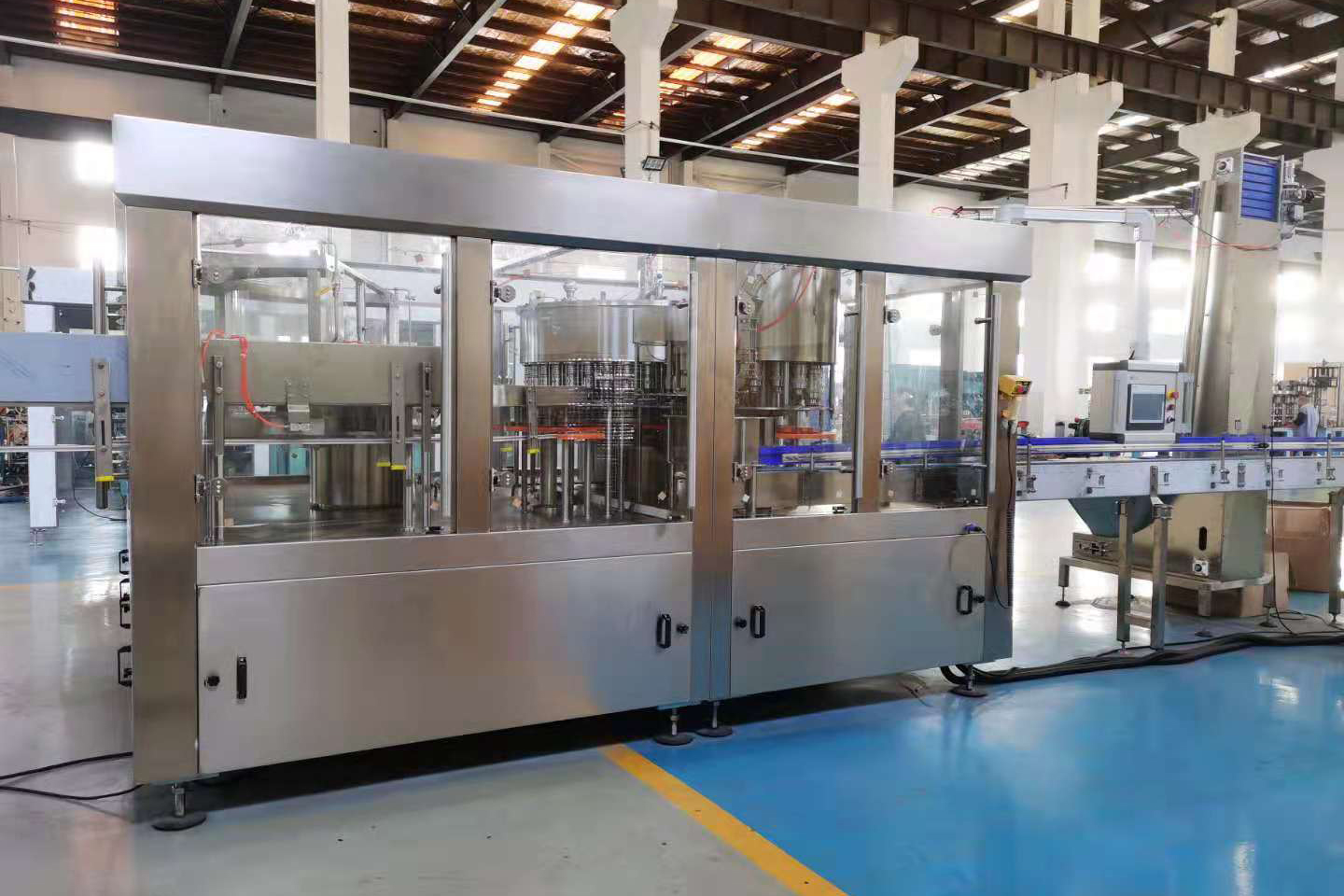
If you’re comparing a Water Filling Machine for a new line, or trying to stabilize an existing water bottle filling machine, three topics decide most outcomes: capacity (how many bottles you can actually run), hygiene (how clean the product-contact system remains during real production), and maintenance (how reliably the equipment stays available). This guide explains how these three factors work together, how to measure them, and how to build routines that protect uptime and product quality.
Quick Definitions and Key Takeaways
Capacity is not just a brochure number. It’s the consistent bottles-per-hour your line can deliver under your bottle size, conveyor stability, operator rhythm, and sanitation schedule.
Hygiene is more than “clean-looking.” It’s the ability of your Water Filling Machine to prevent contamination through hygienic design, disciplined cleaning, and verifiable sanitation routines.
Maintenance is how you prevent minor wear (seals, valves, sensors) from turning into downtime, leaks, inconsistent fill levels, and rising reject rates.
Practical takeaway: When capacity goals climb, hygiene and maintenance must become more structured. The fastest water bottle filling machine is the one that runs steady—without micro-stops, rework, and unplanned cleaning.
Water Filling Machine Capacity Basics: What “Capacity” Really Means
In bottled water production, “capacity” typically describes throughput—often expressed as bottles per hour (BPH) or bottles per minute (BPM). But a real-world capacity number depends on what you are counting and when you are counting it.
Rated capacity: A best-case figure under controlled conditions, usually tied to a reference bottle size and stable inputs.
Net operating capacity: Output while the line is running (excluding long stops), but still affected by normal micro-stops.
Shift capacity: Output over a full shift, including start-up, sanitation, changeovers, quality checks, and operator breaks.
For a Water Filling Machine line, it’s safest to plan using shift capacity. That number aligns with what customers, warehouse teams, and production managers experience in daily operations.
What Determines a Water Bottle Filling Machine’s Real Throughput
1) Bottle and packaging variables
Bottle format and volume: Small bottles may run faster, but only if conveying and capping stay stable.
Neck finish consistency: Inconsistent necks can trigger capper misfeeds, torque issues, and rejects.
Material: PET and glass behave differently on conveyors and in rinsing/capping stations.
2) Process and water conditions
Water temperature: Temperature can influence foaming behavior and filling stability.
Filtration and pre-treatment stability: Fluctuations can lead to pressure variations and inconsistent fill performance.
Foam/turbulence control: Splashing and foam create false “full” signals or require slower filling to hit accuracy targets.
3) Machine and line configuration
Number of filling heads/nozzles: More heads can increase potential throughput, but only if upstream/downstream match.
Indexing time: In rotary or intermittent systems, bottle infeed/outfeed timing becomes a limiting factor.
Line balance: Rinsing, filling, and capping must be synchronized. If the capper is slower, the entire line slows.
Rule of thumb: Your line runs at the speed of the slowest station—not the fastest component.
How to Estimate Capacity: A Simple Calculation You Can Use
You don’t need a complicated simulation to get a reasonable first estimate. Start with the machine’s cycle behavior and bottling rhythm.
| Input | What it means | Example |
|---|
| Bottles per cycle | How many bottles are filled in one complete cycle (or per rotation segment) | 8 bottles |
| Seconds per cycle | Total time including bottle positioning, filling, and release | 10 seconds |
| Estimated BPM | (Bottles per cycle × 60) ÷ seconds per cycle | (8 × 60) ÷ 10 = 48 BPM |
After you calculate the “paper number,” apply a realistic efficiency factor to represent micro-stops, sanitation pauses, and minor adjustments. A disciplined, well-maintained Water Filling Machine line can hold strong efficiency; a line with frequent small issues will drift far below the estimate.
Capacity Benchmarks: What Published Numbers Often Leave Out
When buyers compare a water bottle filling machine, capacity claims are usually based on a specific bottle size, neck type, and line layout. If your bottle differs, your actual throughput can change.
Bottle size assumption: Throughput often references a common bottle format; larger volumes may reduce speed.
Line integration: A stand-alone filler may look “fast,” but real output depends on rinsing, capping, labeling, and packing.
Quality targets: Tighter fill accuracy or stricter hygiene protocols may require slower running or more cleaning time.
In procurement documents, request capacity data tied to your bottle drawings and your target operating conditions. That’s the quickest way to avoid “capacity disappointment” after installation.
Hygiene Requirements for Water Filling Machines: Why It’s Non-Negotiable
Hygiene in bottled water production protects both product safety and brand reputation. A Water Filling Machine can look clean while still carrying risk if internal contact areas are difficult to clean, drainage is poor, or cleaning routines are inconsistent.
Microbial risk: Water systems can develop contamination if cleaning is irregular or if moisture remains trapped.
Biofilm formation: If residue and moisture persist, biofilm can develop and become difficult to remove.
Cross-contamination: Plants that run multiple SKUs or handle different packaging formats need strict sanitation controls.
Best practice: Design hygiene around repeatability—cleaning steps that can be executed the same way, every time, with clear verification and records.
Cleaning and Sanitizing a Water Bottle Filling Machine: Daily to Deep Clean
A reliable sanitation program uses layers: quick daily cleaning to prevent buildup, plus deeper scheduled cleaning to restore hygienic conditions inside product-contact zones.
Daily routine (baseline)
Sanitize product-contact parts (filling nozzles, valves, manifolds) according to your SOP.
Clean splash zones and drip-prone areas to prevent residue accumulation.
Inspect for leaks, sticky valves, unusual odors, or residue—these are early hygiene warnings.
Scheduled deep cleaning (restoration)
Disassemble and clean specific components that can trap moisture (gaskets, seals, small cavities).
Flush internal lines and verify drainage and dry-down where required.
Document sanitation results to support audits and continuous improvement.
CIP (Clean-In-Place): where it fits
CIP can improve consistency by reducing manual variability, especially for medium-to-high throughput lines. However, CIP is only effective when:
Flow paths are designed for full coverage (no hidden dead pockets).
Contact time, chemical concentration, and rinse cycles are validated and recorded.
Operators treat CIP as a controlled process—not a “quick rinse.”
Preventive Maintenance: The Routine That Protects Uptime and Fill Accuracy
Maintenance is the quiet factor behind stable capacity. Many “capacity issues” are actually maintenance issues—worn seals causing drips, sensors drifting out of alignment, conveyors accumulating debris, or valves sticking under high-speed cycles.
| Frequency | Maintenance focus | Why it matters |
|---|
| Daily | Visual checks, leak detection, abnormal noise, sensor cleanliness, basic cleaning | Stops small problems from becoming downtime |
| Weekly | Lubrication points (as applicable), filter checks, fastener inspection, conveyor checks | Prevents micro-stops and inconsistent motion |
| Monthly / Quarterly | Calibration, wear-part inspection (seals/gaskets), valve performance checks | Protects fill accuracy and reduces rejects |
| Annual | Comprehensive inspection, service planning, spares review, operator refresh training | Extends equipment lifespan and stabilizes long-term performance |
Tip for production teams: Track maintenance completion rates the same way you track output. A Water Filling Machine that “misses” its routine will eventually miss its capacity target.
Common Problems and a Troubleshooting Map
When a water bottle filling machine starts underperforming, isolate the symptom first, then apply a structured check. Always follow your safety procedures before servicing equipment.
| Symptom | Likely causes | Fast checks |
|---|
| Inconsistent fill level | Valve wear, pressure fluctuation, sensor misread, foam/turbulence | Check pressure stability, clean sensors, inspect valves/nozzles |
| Dripping or leaks | Worn seals, loose fittings, damaged gasket surfaces | Inspect seals/gaskets, tighten fittings, verify correct assembly |
| Frequent stops or jams | Conveyor debris, misalignment, unstable bottle handling, capper mismatch | Clean conveyor, verify guides, check infeed spacing |
| Sanitation failures / odor | Incomplete cleaning, trapped moisture, biofilm risk zones | Increase cleaning rigor, inspect hidden cavities, verify rinse and dry-down |
| Capacity drifting down over time | Wear parts aging, calibration drift, micro-stops accumulating | Review downtime logs, calibrate sensors, replace wear parts proactively |
If the same issue repeats after basic checks, escalate to deeper inspection: component wear measurement, calibration verification, and root-cause analysis using downtime and reject data.
How Capacity, Hygiene, and Maintenance Affect Each Other
These three elements form a loop:
Weak hygiene increases contamination risk and forces extra cleaning stops, reducing output.
Poor maintenance causes leaks, inconsistent fills, jams, and unstable capping—creating rejects and slowing the line.
Over-pushing capacity without upgrading hygiene and maintenance often leads to more micro-stops, faster wear, and less predictable quality.
To manage the loop, set practical KPIs that connect quality and uptime:
Unplanned downtime minutes per shift
Reject rate (%) and top reject reasons
Sanitation completion rate and verification results
Fill accuracy trend (over time, not just spot checks)
Buyer and Engineer Checklist: Choosing a Water Filling Machine That Stays Clean and Fast
Whether you’re buying a new Water Filling Machine or upgrading an existing line, evaluate the system beyond the headline capacity.
Capacity fit
What is your target BPH today—and what is realistic in 12–24 months?
Can the line maintain output with your bottle range (sizes, neck finishes, materials)?
Is the capper/labeler/packer sized to match the filler’s pace?
Hygiene design
Are product-contact areas easy to access, drain, and verify?
Are seals, gaskets, and contact surfaces designed to minimize trapped moisture?
Does the machine support consistent sanitation (manual SOP or CIP readiness)?
Maintenance readiness
Is there a clear preventive maintenance plan with part numbers and intervals?
Are common wear parts stocked locally and easy to replace?
Does your team receive training for routine inspections and basic troubleshooting?
Perspectives on Water Filling Machine and Water Bottle Filling Machine (Platform-by-Platform)
LaubHunt: Emphasizes structured routines for upkeep, focusing on practical troubleshooting and consistent care to avoid downtime and extend machine life.
ACE Filling: Highlights sanitation discipline and routine inspections as the foundation for stable operation in bottled water production environments.
Asset Packaging: Focuses on process-style cleaning (including flush and system cleaning approaches) to reduce residue buildup and keep performance consistent.
Zapium: Promotes checklist-driven preventive maintenance as a way to standardize inspections and reduce missed tasks across shifts.
Steelhead: Stresses proactive attention to wear items and cleaning details to prevent small issues from escalating into major failures.
Bottle Filling Stations: Frames maintenance as a timed routine with scheduled tasks (such as a periodic review cycle) to keep stations reliable and hygienic.
Made-in-China Insights: Presents maintenance as essential for keeping output stable and meeting buyer expectations for reliability and operational efficiency.
Sinopak: Centers on hygiene controls and quality protection, encouraging consistent cleaning practices alongside operational checks.
CDA USA: Recommends a layered schedule approach (daily through annual) to maximize lifespan and reduce unplanned interruptions.
Yundu: Positions selection and operation around matching the machine configuration to production goals, emphasizing practical guidance for buyers.
FAQs
What is a good capacity for a water bottle filling machine?
A good capacity is the one you can sustain across a full shift without excessive downtime. Start with your daily demand, add a buffer for growth, then validate that your downstream equipment (capper, labeler, packing) can keep pace with the Water Filling Machine.
How do I calculate bottles per hour for a Water Filling Machine?
Estimate BPM using (bottles per cycle × 60) ÷ seconds per cycle, then convert to BPH by multiplying by 60. Finally, apply a realistic efficiency factor to account for routine stops, cleaning, and adjustments.
What parts should be sanitized daily?
Sanitize all product-contact zones—filling nozzles, valves, manifolds, and any surfaces that can splash back into the product pathway. Also keep conveyors and bottle handling zones clean to reduce environmental contamination.
CIP vs manual cleaning: which is better?
CIP can improve repeatability when properly designed and validated. Manual cleaning can still be effective for smaller lines, but it depends more heavily on operator consistency and documented procedures.
What causes inconsistent fill levels?
Common causes include pressure instability, foaming/turbulence, valve wear, sensor drift, and nozzle blockage. Start by checking pressure and cleanliness, then inspect wear parts and calibration if the issue persists.
How often should seals, gaskets, and filters be replaced?
Replacement frequency depends on run hours, water quality, sanitation chemicals, and operating speed. Use a preventive schedule informed by inspection results and downtime trends, then adjust intervals based on real wear patterns.
Conclusion
Capacity, hygiene, and maintenance are not separate discussions—they’re the operating system of a successful bottling line. A Water Filling Machine reaches its true capacity when hygiene is repeatable and maintenance is proactive. If you want your water bottle filling machine to run faster, start by making it run steadier: clean with consistency, maintain with discipline, and measure performance with data that reflects real shifts—not ideal conditions.

 English


