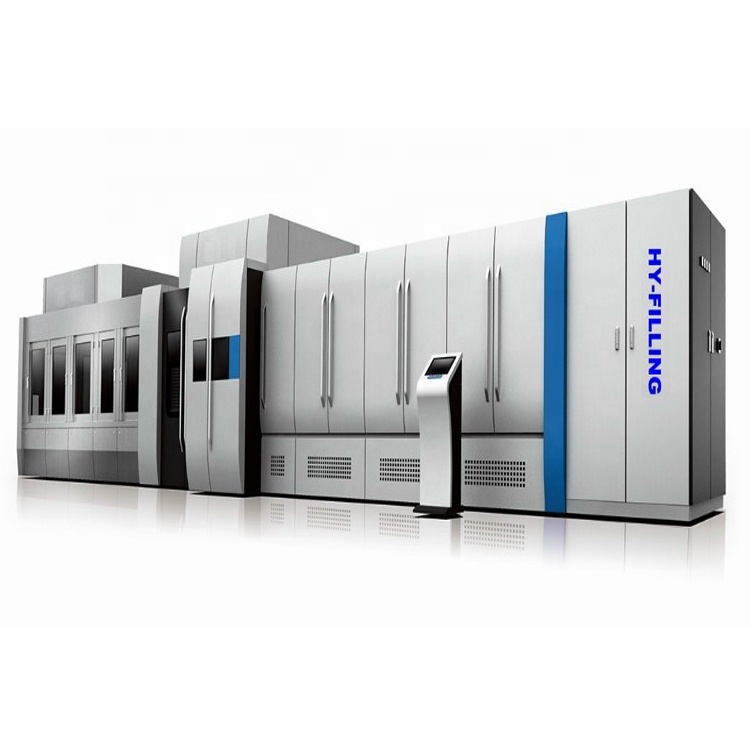
Are energy bills eating into your plant's margins? Walk across your factory floor. Every square meter is fiercely contested by material pallets, forklifts, and sprawling machinery. In this high-stakes environment, relying on aging standalone units is a logistical nightmare. Hundreds of feet of air conveyors connect these silos, consuming power and space. The result is pure inefficiency. To remain competitive, decision-makers must look beyond isolated upgrades and embrace a cohesive production architecture.
Transitioning to a unified setup is not a simple machinery swap. It is a calculated maneuver. You maximize operational real estate. You ensure uncompromising hygiene. You future-proof the packaging line. Let us dive into the engineering and financial advantages of modern integrated blow-fill-cap systems.
Key Takeaways
All-in-One Efficiency: Advanced systems seamlessly merge blowing, filling, and capping into a single continuous motion. This eradicates the need for intermediate accumulation and manual bottle handling.
Massive Space Savings: By consolidating three massive pieces of equipment onto one unified chassis, manufacturing facilities can reclaim up to 30 to 40 percent of their total line footprint.
Enhanced Hygiene and Safety: The direct transfer of containers from the blower to the filler minimizes exposure to airborne factory contaminants. This guarantees a sterile environment for sensitive beverages.
High-Speed Versatility: Modern platforms are highly scalable. They easily accommodate diverse production targets ranging from agile 12,000 bottles per hour setups to relentless 24,000 plus high-speed mega-lines.
Lower Total Cost of Ownership: Drastic reductions in electrical load, high-pressure air consumption, water usage, and routine maintenance overhead lead to a notably accelerated return on investment.
What is a PET Bottle Combi Block Machine?
For plant managers tasked with upgrading their production infrastructure, understanding the fundamental mechanics of modern bottling equipment is the critical first step. True optimization starts here.
The Blow-Fill-Cap Concept Explained
At its core, a Full-Automatic Pet Bottle Blower Filler Capper Combi Block is a marvel of industrial engineering. It synchronizes three vital stages of beverage packaging within a single enclosed block. These stages include the stretch blow molding of raw preforms, precise liquid dosing, and secure closure application. Instead of treating bottle creation and liquid filling as two isolated manufacturing silos, this concept unifies them through flawless kinematic synchronization. Utilizing continuous rotary motion, the machine transfers newly formed sterile bottles directly from the blowing molds to the filling valves via precision star wheels. External conveyors are bypassed entirely.
Evolution from Traditional Bottling Lines
To truly appreciate the elegance of the combi block, one must examine the inefficiencies of legacy architecture. Historically, a beverage plant would procure a standalone blow molder, a separate rotary filler, and a distinct capper. These disparate units were tethered together by extensive networks of pneumatic tracks. Empty plastic bottles are notoriously lightweight and prone to tipping. They had to be blown down these long overhead corridors using banks of high-powered fans.
This conventional method presented severe logistical bottlenecks. Pneumatic tracks consumed massive amounts of overhead and floor space. They drained significant electrical power. Worse, they exposed unsealed bottles to static dust and potential microbial threats during transit. The evolution into the integrated block system stripped away these vulnerabilities. Chaotic air transit was replaced with direct, millimeter-precise mechanical handling.
Industry Trend Analysis: The Shift Toward Holistic Packaging Solutions
Recent global market analyses reveal a sharp pivot in beverage manufacturing strategies. Confronted by volatile energy markets and stringent sustainability mandates, plant managers are abandoning linear production models. The current trend heavily favors holistic Overall Equipment Effectiveness over isolated machine metrics. Industry data indicates a surging growth rate for integrated block systems. This underscores a broader consensus. Future-proofing a facility requires minimizing intermediate handling, maximizing data connectivity, and shrinking the carbon footprint per bottle produced. Efficiency is no longer just about speed; it is about seamless integration.
How Does a Blow-Fill-Cap Combiblock System Work?
Peering inside the protective cabin of this system reveals exactly why it has become the gold standard for high-efficiency beverage plants. The operation follows a strict automated sequence designed to eliminate micro-stoppages.
Preform Heating and Blowing
The journey begins at the unscrambler. Injection-molded preforms are fed into the system infeed rail. These rigid plastic tubes glide through an infrared heating oven. They are meticulously warmed to their exact glass transition temperature. The thermal profile is customized via the control panel based on the specific geometry of the final container. Once optimally softened, the preforms enter the rotary blow molding carousel. A mechanical stretch rod plunges into the preform to provide vertical orientation. Simultaneously, a blast of compressed air reaching up to 40 bar forces the plastic to expand perfectly against the chilled walls of the mold.
Precision Liquid Filling
Within milliseconds of being formed and cooled, the container is extracted from the mold. A transfer star wheel grips the bottle strictly by its rigid neck ring, handing it over to the filling carousel. The container never leaves the enclosed positive-pressure environment of the machine. Therefore, it remains virtually sterile. Depending on the fluid dynamics of the beverage, the dosing technology adapts. Still water relies on gravity or electronic flow meters. Conversely, carbonated soft drinks utilize isobaric counter-pressure filling. This ensures dissolved carbon dioxide remains trapped in the liquid during the pour.
Secure Capping and Sealing
Immediately after the liquid hits the target fill line, the container is swept into the capping turret. Closures are pre-sterilized via UV light or chemical rinsing within the cap chute. They are swiftly applied. Magnetic torque heads ensure every single cap is fastened with the exact rotational force required. It must be tight enough to prevent microscopic leaks and preserve carbonation, yet loose enough for the end consumer to twist off effortlessly. The finished product then glides out of the machine, primed for labeling and secondary packaging.
Top Benefits of Integrated Bottling Systems
Shifting away from legacy equipment requires a calculated capital expenditure. However, the immediate operational advantages rapidly justify boardroom approval. Decision-makers evaluate these integrated platforms based on several transformative benefits.
Significant Footprint Reduction
Real estate on a manufacturing floor is a premium asset. It directly impacts plant scaleability. Traditional configurations demand vast square footage. This space is needed not just for the primary units, but for the sprawling accumulation buffers and conveyor belts that link them. By consolidating the blower, filler, and capper onto a single robust frame, plant engineers can slash their equipment footprint by up to 40 percent. This spatial liberation allows facilities to install additional production lines under the same roof. Alternatively, they can repurpose the saved area for raw material warehousing.
Superior Hygiene and Reduced Contamination
Global food safety regulations are tightening. Consumer tolerance for product recalls is zero. In a fragmented setup, empty containers traveling on open air conveyors generate static electricity. They act as magnets for ambient factory dust. Furthermore, prolonged exposure to ambient air exponentially increases the risk of microbial settling. A unified system operates within a highly controlled micro-environment. It is typically fortified with HEPA filters that maintain positive air pressure. The sub-second transition from blowing to filling effectively locks in the hygienic integrity of the beverage.
Energy and Resource Efficiency
Utility costs remain a primary pain point for operations directors. Integrated platforms outright eliminate the multiple fan motors required to drive pneumatic tracks. Building on this mechanical foundation, modern systems leverage advanced servo-motor technology and intelligent air recovery circuits. The high-pressure exhaust generated during the blow molding phase is captured. It is then filtered and redirected to power low-pressure pneumatic cylinders across the machine. This drastically slashes the burden on the factory main compressor room.
Minimized Bottle Scratching and Damage
Freshly blown plastic is surprisingly soft and susceptible to cosmetic damage. When containers rattle against the stainless steel guide rails of traditional conveyors, they develop unsightly scuff marks. This degrades the premium aesthetic of the final product on retail shelves. Integrated machines circumvent this entirely through neck-handling technology. From the moment the preform enters the oven until the sealed bottle exits the capper, the container is suspended exclusively by its neck ring. The bottle body never touches a rail. This preserves a pristine glass-like finish.
Traditional Bottling Lines vs. Combi Block Systems
To construct a compelling business case for transitioning away from legacy equipment, financial controllers must look beyond the initial sticker price. A rigorous lifecycle cost analysis is required. Below is a direct comparison highlighting the core operational differences.
Operational Metric
Traditional Bottling Line
Integrated Combi Block
Floor Space Required
Extensive. Requires long air conveyors and buffer zones.
Compact. Saves up to 40% of floor space by eliminating conveyors.
Energy Consumption
High. Multiple standalone motors and high-powered conveyor fans.
Low. Utilizes shared drives and high-pressure air recovery systems.
Contamination Risk
Moderate to High. Bottles exposed to ambient air during transit.
Extremely Low. Enclosed HEPA-filtered environment from blow to fill.
Labor & Maintenance
Requires multiple operators and constant conveyor maintenance.
Single operator control via centralized HMI. No conveyor jams.
Bottle Handling
Base handling. High risk of scuffing and cosmetic damage.
Neck handling. Zero body contact preserves bottle aesthetics.
Managing a fragmented line often leads to operational chaos. If the capper jams, downstream conveyors overflow. This forces the blower into an emergency halt, ruining the thermal consistency of heated preforms. Integrated systems eliminate this blind spot. A single control panel delivers real-time diagnostics. If the filler detects a slight delay, the blower automatically throttles its speed in perfect harmony. This averts material waste and eliminates floor chaos.
Production Capacities: Scaling from 12,000 to 24,000+ BPH
Matching machinery throughput to specific market demand is critical. It maintains a healthy operational cadence and avoids bottlenecking upstream processing equipment.
Mid-Range Solutions for Agile Production
For regional beverage brands prioritizing product diversity over sheer volume, a 12,000 bottles per hour system strikes the perfect balance. These mid-range platforms are inherently more forgiving during frequent format changeovers. They demand a lower initial capital outlay. They serve as the ideal workhorse for companies testing novel bottle designs or filling specialized functional beverages. Here, maintaining steady output trumps raw blinding speed.
High-Speed Output for Maximum Scale
Conversely, global beverage conglomerates operate strictly on economies of scale. High-speed output platforms producing 24,000 to over 36,000 bottles per hour are non-negotiable. These heavy-duty titans are forged with robust metallurgy and sophisticated vibration-dampening chassis. They endure the brutal rigors of continuous production. At these extreme velocities, kinematic synchronization must be flawless. State-of-the-art servo drives maintain microsecond accuracy between the blowing and filling carousels.
Latest Technological Advancements in Combiblock Systems
The packaging machinery sector thrives on relentless innovation. To maintain a competitive edge, equipment manufacturers embed cutting-edge digital and mechanical features into their integrated packaging solutions.
Smart Automation and IoT Integration
The era of Industry 4.0 has transformed modern bottling machines into intelligent data hubs. Through internet connectivity, plant managers monitor live performance metrics remotely. Embedded sensors continuously track vibration signatures, servo temperatures, and pneumatic pressures. This telemetry feeds into predictive maintenance algorithms. Maintenance crews are alerted to replace a wearing seal long before it triggers an unplanned shutdown.
Eco-Friendly Upgrades and Lightweighting
Sustainability is a strict regulatory mandate. Recent engineering leaps have optimized handling dynamics for ultra-lightweight preforms. Because the container is never subjected to the lateral crushing forces of traditional air conveyors, manufacturers can aggressively reduce plastic thickness. Modern systems provide the mechanical precision needed to process water bottles weighing as little as 7 grams. This directly slashes resin procurement costs and mitigates environmental impact.
Choosing the Right Equipment for Your Plant
Procuring advanced industrial machinery is a highly nuanced process. A generic off-the-shelf approach rarely yields optimal results in complex beverage manufacturing. Use the following criteria to guide your selection.
Assessing Your Beverage Type
The chemical and physical properties of your product dictate the internal architecture of the filling module. Still non-viscous liquids like purified water require straightforward gravity or volumetric valves. If your portfolio includes highly carbonated energy drinks, the system must be armed with sophisticated isobaric technology to manage carbon dioxide volatility. Similarly, acidic juices that demand hot-filling upwards of 85 degrees Celsius require specialized heat-resistant blowing molds. Fluid recirculation loops are also mandatory to prevent plastic warping upon contact with hot liquid.
Integrating with Whole Line Solutions
An integrated blow-fill-cap unit does not operate in a vacuum. It serves as the beating heart of your entire production ecosystem. Selecting a highly configurable system ensures seamless communication with downstream equipment. Plant engineers must guarantee that the block output velocity perfectly matches the intake appetite of downstream labelers and automated palletizers. Intelligent buffer tables should be utilized to absorb minor downstream hiccups without halting the primary filler.
Partnering with a Reliable Manufacturer
The most critical variable in this technological upgrade is your choice of manufacturer. You are forging a decade-long operational partnership. It is imperative to align with a supplier that delivers transparent software architecture, comprehensive on-site operator training, and an ironclad guarantee on rapid spare parts availability.
Conclusion
Streamlining complex bottling operations demands smart forward-thinking capital investments. By abandoning the fragmented space-consuming layouts of the past, beverage manufacturers can unlock unprecedented levels of efficiency, hygiene, and agility. While the initial procurement of integrated technologies requires a definitive financial commitment, the compounding daily savings in floor space, energy usage, and labor overhead undeniably justify the transition.
Stop letting outdated machinery dictate your production limits. Discover the advanced capabilities of a PET Bottle Combi Block Machine today, and elevate your facility operational excellence to meet the demands of tomorrow beverage market.
FAQ
What types of liquids can be filled using an integrated blow-fill-cap system?
These advanced platforms are engineered for remarkable versatility. By customizing the fluid path and valve architecture during the design phase, they can precisely dose a wide spectrum of liquids. This includes still purified and mineral waters, carbonated soft drinks, hot-filled juices and teas, dairy products, and even viscous household liquids. The core requirement is specifying the appropriate dosing technology prior to manufacturing.
How much space does a combi block machine save compared to a traditional line?
Empirical factory layout data shows that integrated systems typically reduce the required primary equipment footprint by 30 to 40 percent. In a legacy setup, the blow molder and filler are physically separated by long winding pneumatic conveyors. By stripping away these tracks and merging the three core stations onto a single compact chassis, facilities reclaim massive amounts of valuable floor space.
Can one combi block system handle multiple bottle sizes?
Yes. Modern systems are specifically designed to accommodate format flexibility. Through the utilization of quick-release mold mechanisms in the blowing station and adjustable neck-handling guides throughout the filling turrets, operators can swiftly transition between various bottle volumes. Advanced servo-driven adjustments allow these changeovers to be executed rapidly, drastically minimizing planned downtime.
Is a blow-fill-cap combiblock difficult to maintain?
Despite their sophisticated internal engineering, these systems are designed to streamline plant maintenance. Because the entire unit is governed by a centralized interface, diagnostic software can instantly pinpoint the exact origin of a mechanical fault. Additionally, modern machines feature automated centralized lubrication banks and highly accessible modular components. Servicing one unified machine is demonstrably more efficient than juggling the preventative maintenance schedules of three aging disparate units.
How does a combi block improve Overall Equipment Effectiveness?
Overall Equipment Effectiveness measures availability, performance, and quality. A combi block improves availability by eliminating conveyor jams and utilizing predictive maintenance sensors to prevent unexpected breakdowns. It boosts performance through synchronized servo-driven speeds that eliminate micro-stoppages. Finally, it enhances quality by using neck-handling technology to prevent bottle scuffing and maintaining a sterile enclosed environment that prevents contamination.
What is the typical lifespan of an integrated blow-fill-cap machine?
When properly maintained according to OEM specifications, a high-quality integrated system can operate efficiently for 15 to 20 years. The robust metallurgy, vibration-dampening chassis, and use of premium servo motors ensure longevity even under rigorous 24/7 production schedules. Regular software updates and modular upgrades can further extend the machine operational lifespan and keep it aligned with modern production standards.

 English