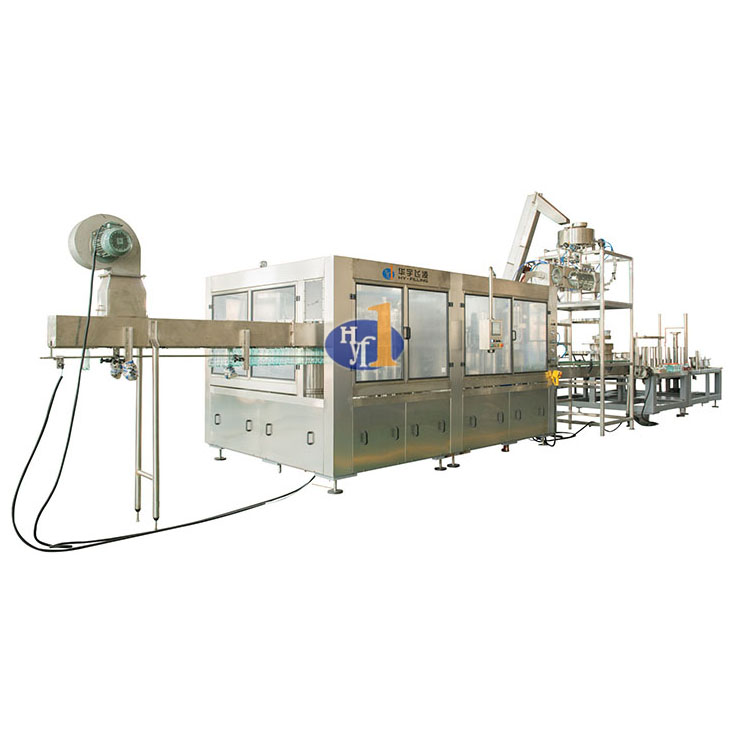
Global soda demand is rising at an unprecedented rate. This surge forces beverage manufacturers to ask a critical question. Are your current production lines truly keeping up? Picture your factory floor during peak summer demand. Downstream packaging operators stand idle, waiting for the filler to catch up. Retailers demand shipments you simply cannot fulfill. Outdated manual equipment actively causes costly bottlenecks. Ultimately, this inefficiency leads to flat drinks, compromised brand reputation, and lost sales.
In this comprehensive guide, we explore how to strategically scale operations. Upgrading to an automated High-Speed Carbonated Beverage Bottling Plant optimizes your workflow. It drastically improves your return on investment and future-proofs your brand against aggressive market competition.
Key Takeaways
Scalability is Critical: Transitioning from small-scale setups to a high-capacity production environment meets growing market demand and drives down per-unit manufacturing costs.
Precision Technology: Advanced industrial plants utilize isobaric filling technology. This ensures zero carbonation loss, prevents foaming, and guarantees strict product consistency.
Comprehensive Integration: A complete modern production line seamlessly synchronizes reverse osmosis water treatment, carbon dioxide mixing, filling, capping, and end-of-line packaging into one continuous workflow.
Strategic Return on Investment: The long-term savings in labor, reduced mechanical downtime, and exponentially increased output deliver a measurable and rapid financial return.
Vendor Selection Matters: Partnering with a reliable equipment manufacturer ensures the deployment of a customized facility tailored precisely to your spatial and operational requirements.
The Growing Demand for Carbonated Soft Drinks and Market Trends
The global beverage manufacturing sector continues to experience steady, quantifiable growth. Current market trajectories indicate that consumer reliance on packaged beverages remains incredibly robust. However, traditional colas no longer dominate the market alone. Recent industry trend analyses reveal a massive consumer shift toward highly specialized niches. Shoppers aggressively seek out functional craft sodas, prebiotic sparkling waters, and zero-sugar carbonated energy drinks. Furthermore, sustainability and automation are becoming core pillars of modern manufacturing facilities.
This diversification in consumer taste creates a direct capacity challenge for mid-sized beverage brands. Emerging product categories require exacting carbonation levels to meet consumer expectations regarding mouthfeel and flavor profile. Facilities relying on legacy equipment often face strict production thresholds. They struggle to maintain the delicate balance of dissolved carbon dioxide required for these premium drinks. Consequently, when market demand exceeds mechanical limitations, manufacturers encounter stockouts and severely compromised retailer relationships.
Brands failing to upgrade their production lines risk losing highly coveted supermarket shelf space. Competitors who possess the manufacturing agility to guarantee consistent supply will easily overtake them. Therefore, scaling operations is no longer merely an option. It is an absolute operational necessity to secure and expand your market position.
What Exactly is a High-Speed Carbonated Beverage Bottling Plant?
Terminology matters deeply in industrial beverage manufacturing. A premium High-Speed Carbonated Beverage Bottling Plant is not defined by a single fast machine. Rather, it represents the synchronized throughput of an entire automated ecosystem. In industry standard terms, high-speed typically refers to facilities capable of producing anywhere from 10,000 to over 36,000 bottles per hour. This output depends heavily on container volume and liquid characteristics.
Unlike semi-automatic setups where distinct processes require manual transfer, a high-speed plant operates on a continuous workflow principle. Raw water enters the system, gets purified, carbonated, and injected into sanitized bottles. The bottles are sealed, labeled, and palletized in one uninterrupted stream. This seamless synchronization minimizes the time the product is exposed to the open environment. It drastically reduces contamination risks and preserves vital gas volume.
Additionally, modern high-speed systems are engineered for extreme versatility. A well-designed 3-in-1 monoblock plant accommodates multiple bottle sizes. Formats range from 250ml sleek bottles to 2.0L family sizes. Through engineered changeover parts like adjustable neck guides and modular star wheels, facility operators transition between different product runs with minimal mechanical downtime.
Key Signs It Is Time to Upgrade Your Beverage Production Line
Determining the exact moment to overhaul a manufacturing facility requires a careful analysis of operational data. Decision-makers should closely monitor specific key performance indicators to identify when legacy systems actively hinder profitability.
Frequent Production Bottlenecks
The most glaring indicator is a consistent disruption in the supply chain caused by equipment limitations. Downstream packaging operators frequently stand waiting for the filler to catch up. Sometimes, upstream water treatment outpaces the filling station. Manual or low-speed filling machines inherently anchor the entire facility's speed. They limit daily output regardless of how many overtime labor hours you apply.
Inconsistent Product Quality
Quality control is paramount in carbonated soft drinks. Older filling machines often suffer from degrading pneumatic seals and imprecise pressure valves. This mechanical wear leads to varying fill levels across a single batch. More critically, it results in flat beverages due to poor gas retention. When quality assurance teams report increasing instances of rejected batches, the mechanical integrity of the current system is undeniably compromised.
High Labor and Maintenance Costs
Legacy systems demand constant human intervention and frequent emergency maintenance. Profit margins are often disproportionately consumed by overtime pay for manual loaders. Urgent maintenance calls to patch aging pneumatic parts quickly turn the old equipment into a severe financial liability.
Inability to Fulfill Large Orders
There is a definitive tipping point for mid-sized brands. Retail purchase orders consistently exceed the maximum theoretical daily output of the factory floor. Turning down lucrative distribution contracts due to capacity constraints is the ultimate signal. Your current infrastructure is actively restricting corporate growth.
Core Components of a Modern Production Line
Understanding the anatomy of a scaled facility is crucial for operations directors evaluating equipment specifications. A high-speed operation is categorized into three primary functional zones that must work in perfect harmony.
Advanced Water Treatment and Mixing Systems
The foundation of any exceptional beverage is water quality. High-speed plants incorporate industrial-grade reverse osmosis water purification systems. These multi-stage filtration units strip out micro-impurities, chlorine, and dissolved solids. They ensure a neutral baseline that will not alter the beverage flavor profile.
Following purification, the liquid moves to the carbonator. This highly calibrated equipment precisely blends the purified water, flavored syrup, and carbon dioxide. Because gas dissolves significantly better at lower temperatures, these mixing systems feature integrated chilling units. They drop the liquid temperature to an optimal range between 2 and 4 degrees Celsius before injecting the gas under strict pressure parameters.
Isobaric Equal Pressure Filling Technology
The most critical engineering challenge in carbonated beverage manufacturing is keeping the gas suspended in the liquid during the violent transfer into the bottle. A modern High-Speed Carbonated Beverage Bottling Plant solves this through isobaric filling technology.
Standard atmospheric pressure causes dissolved gas to rapidly escape, leading to severe foaming. Isobaric fillers utilize a specialized pneumatic valve system. The empty bottle is sealed tightly against the filling nozzle. The machine injects pressurized gas into the empty bottle until the internal pressure exactly matches the pressure inside the liquid holding tank, typically maintained between 0.2 and 0.4 MPa. Once equilibrium is achieved, the liquid flows gently down the interior walls by gravity. This equalized environment prevents agitation and ensures filling precision within 2 millimeters.
Automated Capping and End-of-Line Packaging
Immediately following the filling phase, bottles are rapidly transferred to the capping station via synchronized star wheels. This transition must be seamless to prevent any gas escape before the seal is applied. High-speed cappers use magnetic torque heads to apply closures with exact rotational force. This ensures a hermetic seal without stripping the delicate plastic threads.
The downstream process is equally sophisticated. Bottles pass through high-speed labeling machines applying heat-shrink sleeve labels or wrap-around labels using hot melt adhesive. Automated end-of-line packaging systems group the bottles, wrap them in shrink film, and utilize robotic palletizers to stack the finished goods for warehouse distribution.
Top Benefits of Investing in Automated Infrastructure
Capital investment in manufacturing infrastructure must be justified by clear and measurable operational improvements. Transitioning to an automated plant offers several distinct advantages that directly impact the bottom line.
Exponentially Increased Production Capacity
The primary driver for this massive investment is volume. Semi-automatic lines typically cap out between 1,000 and 3,000 bottles per hour. In contrast, entry-level high-speed lines begin at 10,000 bottles per hour and can easily scale upwards of 36,000 bottles per hour. This exponential increase fundamentally alters a brand revenue potential. Manufacturers can aggressively pursue larger distribution deals with national supermarket chains without the looming fear of stockouts.
Enhanced Product Consistency and Quality Control
Human error is the leading cause of batch inconsistency. Fully automated plants completely remove this volatile variable. Modern filling blocks are equipped with automated clean-in-place systems. These circulate sanitizing chemicals and scalding water through all internal piping and valves without requiring machine disassembly. This guarantees stringent hygiene standards between flavor changes.
Lower Long-Term Operational Costs
While the initial capital expenditure is substantial, the operational expenditure per unit drops dramatically. Automation drastically reduces the manual labor headcount required to run a shift. Instead of ten manual operators wrestling with pallets, a high-speed line may only require two skilled technicians to monitor the programmable logic controllers. Furthermore, precision filling valves minimize liquid waste and costly syrup spillage. Modern servo motors optimize electrical energy consumption, driving down utility costs over the lifespan of the equipment.
Crucial Tips for Scaling Up Your Carbonated Drink Production
Transitioning from a semi-automatic setup to a fully automated facility requires more than just purchasing new machinery. It demands a holistic approach to facility management, workflow optimization, and workforce development. Successfully integrating new equipment means anticipating bottlenecks before they occur.
Facility Space Planning and Layout Optimization
A common oversight when upgrading production capacity is vastly underestimating the physical footprint required for a large-scale operation. High-speed systems encompass extensive conveyor networks, massive accumulation tables, and expansive end-of-line packaging systems.
Conduct a rigorous audit of your current factory floor plan before committing to a purchase. You must account for raw material staging areas, the syrup room, water treatment tanks, and the finished goods warehouse. High-speed output means pallets fill up rapidly. This requires a highly efficient forklift routing system or automated guided vehicles to move inventory safely.
Matching Upstream and Downstream Capacity
The efficiency of your entire facility is dictated by its slowest component. Investing in a state-of-the-art filler capable of processing 24,000 bottles per hour is financially counterproductive if your water treatment system can only supply enough purified water for 15,000 bottles per hour.
Your upstream equipment and downstream equipment must match or slightly exceed the speed of the central filling block. Below is a standardized capacity matching checklist to guide your equipment evaluation.
Production Stage
Equipment Component
Capacity Requirement Relative to Filler
Key Considerations
Upstream
Reverse Osmosis Water Treatment
+15% to +20%
Must account for water used in clean-in-place and boiler systems.
Upstream
Carbonation Mixer
+10%
Continuous flow is required to prevent filler starvation.
Core
Isobaric Filling Block
Baseline 100%
The benchmark metric for the entire production line.
Downstream
Labeling Machine
+10% to +15%
Needs buffer speed to clear accumulation tables quickly.
Downstream
Shrink Wrapper
+15%
Must handle multi-packs without causing conveyor jams.
Prioritizing Automation and Smart Tech
Scaling up introduces operational complexity that cannot be managed efficiently through manual oversight alone. Modern beverage manufacturing relies heavily on data-driven decision-making. Prioritize equipment that features advanced programmable logic controllers and data acquisition systems.
These smart technologies provide real-time monitoring of critical parameters such as filling pressure, gas concentration, and sealing torque. Touch-screen interfaces allow operators to quickly diagnose faults, reducing repair time. Predictive maintenance sensors monitor vibration and temperature on critical motors, alerting your team to potential failures before they cause catastrophic downtime.
Staff Training and Workforce Transition
Upgrading your machinery fundamentally changes the nature of your workforce daily tasks. The shift moves from physical bottle handling to machine operation, quality assurance monitoring, and automated troubleshooting.
Your current employees will need comprehensive upskilling. Budget allocation should include rigorous training programs provided by the equipment manufacturer. A highly trained maintenance crew is arguably your most valuable asset when operating high-speed lines. Their ability to perform rapid mechanical changeovers directly impacts your overall profitability.
Standardized Criteria for Choosing the Right Equipment Manufacturer
Selecting the vendor for your production line is one of the most consequential capital expenditure decisions your company will make. The right partner acts as an extension of your engineering team. The wrong choice leads to chronic mechanical failures and severe financial losses.
Customization Capabilities
No two beverage brands have identical operational needs. Your product portfolio might include 330ml sleek cans, 500ml standard PET bottles, and 1-liter glass bottles. You require a vendor with deep engineering expertise who can tailor the plant to your specific packaging formats, cap types, and factory layout constraints. Avoid standardized off-the-shelf solutions that force you to compromise your operational flow.
Material Quality and Hygienic Design
Carbonated soft drinks, sparkling waters, and energy drinks often contain highly acidic compounds like citric or phosphoric acid. Therefore, equipment durability is absolutely non-negotiable. Ensure that all parts making direct contact with the beverage are constructed from food-grade stainless steel. Standard applications require SUS304, while highly corrosive environments demand SUS316L. This hygienic design eliminates dead corners where bacteria or syrup residue could accumulate.
After-Sales Support and Spare Parts Availability
Mechanical wear is inevitable in continuous industrial operations. The true value of a manufacturer is revealed during a breakdown. Inquire about their service level agreements. Do they offer round-the-clock remote diagnostic support? Choosing a fully integrated High-Speed Carbonated Beverage Bottling Plant from a single reliable vendor simplifies maintenance, as you only have one point of contact for the entire ecosystem.
Factory Acceptance Testing
Mitigate your investment risk by demanding verifiable proof of past performance. Request detailed case studies of similar installations operating at the speeds you plan to produce. Furthermore, insist on a rigorous factory acceptance test before the equipment leaves the manufacturer facility. This allows your engineering team to verify that the machinery meets all contractual speed, quality, and safety specifications under simulated production conditions.
Conclusion
Scaling up your production is not just about purchasing faster machinery. It is about transforming your entire manufacturing ecosystem to be more efficient, highly profitable, and relentlessly consistent. Transitioning to advanced automated infrastructure is a foundational investment. It bridges the critical gap between being a growing local brand and becoming an industry leader.
Are you ready to eliminate production bottlenecks and maximize your profit margins? Assess your current production capacity today. We highly recommend exploring the premium, custom-engineered solutions provided by Huayu Machine. By selecting a customized High-Speed Carbonated Beverage Bottling Plant tailored to your factory layout, you can future-proof your beverage brand for decades to come. Contact their expert engineering team today to get a precise quote and elevate your manufacturing capabilities.
Frequently Asked Questions
How many bottles per hour can a high-speed carbonated beverage bottling plant produce?
Production speeds vary significantly based on the specific machine model, the number of filling valves, and the volume of the container being filled. Generally, a plant is classified as high-speed when it exceeds 10,000 bottles per hour. Modern, state-of-the-art production lines can comfortably process anywhere from 15,000 to over 36,000 bottles per hour for standard 500ml PET bottles. When planning capacity, calculate your peak seasonal demand to ensure the selected speed accommodates future market growth.
How does the equipment maintain carbonation during the filling process?
Maintaining precise gas levels is the most critical challenge in carbonated beverage manufacturing. High-speed plants utilize advanced isobaric counter-pressure filling technology to achieve this. Before the liquid enters the bottle, the filling valve seals the container and injects it with carbon dioxide, equalizing the pressure between the bottle and the filling tank. Once balanced, the chilled beverage flows gently down the inner walls of the bottle. This environment prevents the liquid from foaming and stops dissolved gas from escaping.
Can the machinery handle different bottle sizes and shapes?
Yes, modern high-speed production lines are engineered with incredible flexibility. A single line can handle multiple bottle volumes and shapes. For PET bottles, this is achieved through neck-handling technology, where bottles are suspended by their neck rings. To change bottle sizes, operators simply swap out quick-release change parts like star wheels and guide rails. This process can typically be completed in under an hour by a trained maintenance crew.
What is the typical return on investment timeline for upgrading to a high-speed production line?
While the initial capital expenditure for a fully automated plant is substantial, the return on investment is often realized relatively quickly, typically within 18 to 36 months. This rapid payback is driven by multiple factors. Exponential increases in output allow brands to fulfill larger retail contracts. Automation drastically reduces manual labor expenses, and precision filling valves minimize liquid waste and product rejects.
Do I need to upgrade my water treatment system when buying a high-speed filler?
In almost all cases, yes. Upgrading the central filling block without upgrading the surrounding infrastructure creates an immediate operational bottleneck. Upstream equipment, particularly the reverse osmosis water purification system and the beverage carbonation mixer, must be appropriately sized to match the flow rate of your new filler. If your filler processes 20,000 liters per hour but your water treatment system only outputs 10,000 liters per hour, your high-speed filler will be forced to pause and wait.
How much factory floor space is required for a complete bottling line?
Space requirements depend entirely on your target capacity and automation level. A standard 15,000 bottles per hour line typically requires a minimum of 500 to 800 square meters. This footprint must accommodate the water treatment system, syrup mixing tanks, the main 3-in-1 monoblock filler, labeling machines, shrink wrappers, and extensive conveyor buffers. Proper layout design is essential to ensure smooth forklift access and safe operator movement.
What are the utility requirements for running a high-speed plant?
Operating a high-capacity facility requires robust industrial utilities. You will need a stable three-phase electrical supply, typically exceeding 200kW depending on the heating and chilling units. Additionally, the plant requires a high-pressure, oil-free air compressor system for the pneumatic valves. A dedicated steam boiler is often necessary for the clean-in-place system, alongside adequate floor drainage to handle high-volume wastewater discharge.

 English