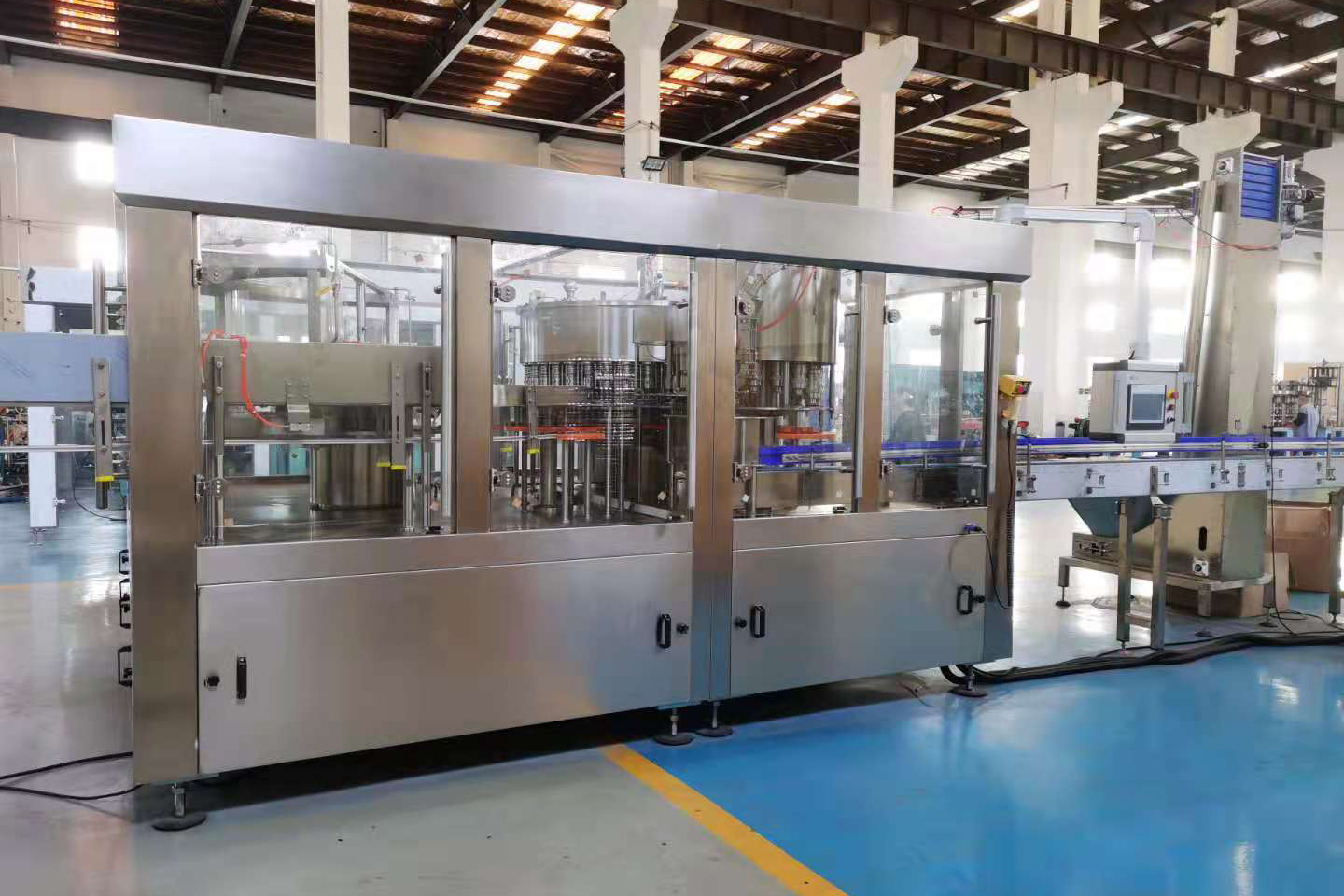
Precision control in liquid filling machine performance matters because it directly determines product fill accuracy, eliminates expensive product giveaway, guarantees compliance with international net weight regulations, and maximizes operational throughput. By utilizing advanced servo-driven systems, real-time sensor feedback, and automated validation mechanisms, a modern bottle filling machine eliminates manual calibration errors and minimizes fluid turbulence, which stabilizes the entire production workflow and ensures a superior return on investment.
To fully understand how precision control transforms a high-speed production floor, it is necessary to examine the core technologies and modern methodologies that govern liquid packaging systems. This comprehensive guide covers the technical mechanisms of liquid regulation, the analytical software driving predictive optimization, and the practical methods for maintaining high efficiency. Through proper design and engineering integration, an automated industrial facility can achieve unprecedented levels of accuracy and speed.
The following sections analyze the underlying factors that determine liquid filler performance, outlining the engineering advancements that make modern equipment reliable under intense production pressures. From advanced flow-meter configurations to real-time machine vision inspection, each element plays a critical role in minimizing waste and maximizing profitability for modern commercial enterprises using an automated bottle filling machine.
Table of Contents
The Critical Role of Precision in Liquid Filling Machine Performance
Advanced Technologies Driving Precision in Liquid Filling Machines
Sensors and Vision Systems: Ensuring Real-Time Precision Control
AI and Predictive Intelligence in Liquid Filling Machine Optimization
Balancing Quality Control and Process Efficiency in Industrial Applications
The Critical Role of Precision in Liquid Filling Machine Performance
The critical role of precision in liquid filling machine performance centers on preventing product overfills or underfills, protecting raw material resources, and maintaining strict compliance with international packaging metrics. An optimized bottle filling machine relies on this exact control to prevent liquid turbulence, handle varying fluid viscosities, and ensure uniform container fills at maximum operating velocities.
Industrial liquid packaging requires absolute control over fluid dynamics to ensure that each container holds the precise volume or weight specified. When a packaging plant deploys a modern bottle filling machine, precision control directly dictates the financial bottom line by curbing product giveaway. Product giveaway occurs when a bottle filling machine consistently overfills containers to avoid legal penalties associated with under-filling. Over thousands of cycles, even a minor overfill of a few milliliters per bottle results in significant losses of valuable liquid product. Therefore, high-precision bottle filling machine engineering is crucial for stabilizing operational margins and securing raw material usage across large-scale manufacturing operations.
Beyond material savings, precise liquid handling ensures brand consistency and customer satisfaction. Consumers expect every bottle produced by an automated bottle filling machine to exhibit identical fill levels, particularly in transparent glass or plastic packaging where discrepancies are immediately visible. In sectors like the beverage industry, utilizing an advanced High-Accuracy CSD Bottle Filling Machine ensures that highly carbonated drinks are packaged with minimal foaming and exact carbonation preservation. This specialized bottle filling machine performance depends on specialized pressure-balanced filling valves that equalize pressure before liquid introduction, illustrating how precision design supports product quality and aesthetic uniformity.
Furthermore, strict international regulations demand that packaged goods adhere to tight net-quantity tolerances, making accurate liquid processing a strict legal requirement. A failure in bottle filling machine precision can result in severe product recalls, heavy legal fines, and permanent damage to corporate reputation. To mitigate these risks, automated plants integrate sophisticated feedback loops into their primary bottle filling machine setups. These systems track fluid temperatures, container weights, and fill levels in real time, making instant micro-adjustments to the filling nozzles to prevent non-compliant batches from reaching the distribution network.
To illustrate the impact of precision variations, consider the performance metrics of different bottle filling machine designs operating across various container volumes:
Filling Valve Type
Target Volume (ml)
Accuracy Tolerance (%)
Average Product Giveaway (ml)
Primary Liquid Application
Standard Gravity Valve
500
±1.5%
7.5
Low-viscosity still liquids via bottle filling machine
Electronic Flow Meter Valve
500
±0.2%
1.0
Premium beverages and juices via bottle filling machine
Piston Servo Valve
1000
±0.1%
1.0
High-viscosity creams and oils via bottle filling machine
Isobaric Counter-Pressure Valve
330
±0.3%
1.0
Carbonated soft drinks via advanced bottle filling machine
Advanced Technologies Driving Precision in Liquid Filling Machines
Advanced technologies driving precision in liquid filling machines include high-resolution electromagnetic flow meters, servo-driven mechanical pistons, and programmable logic controller (PLC) automation loops. These specialized components allow a modern bottle filling machine to rapidly adapt to shifting fluid dynamics and maintain microsecond filling valve synchronization.
The engineering core of a high-speed bottle filling machine relies on advanced electronic components to manage complex fluid dynamics. Traditional mechanical cam-driven systems have largely been replaced by independent servo motors that drive individual filling pistons and rotating filling carousels. A servo-driven bottle filling machine allows operators to program precise acceleration and deceleration profiles for the filling nozzles, minimizing liquid splashing and foaming during high-speed fills. This level of mechanical control is vital when managing a high-output bottle filling machine, where a fraction of a second determines whether a container is perfectly filled or disastrously over-pressurized.
Another major technological advancement is the integration of advanced flow meters directly into the fluid distribution manifold of the bottle filling machine. Electromagnetic flow meters and Coriolis mass flow meters provide instantaneous tracking of the fluid volume passing through each valve. Unlike older vacuum or gravity-based fill-to-level systems, a flow-meter-equipped bottle filling machine measures actual liquid volume or mass, independent of variations in bottle shape or internal volume. This means that even if a plastic bottle has minor structural deformities, the bottle filling machine ensures the correct product mass is delivered every time.
For modern high-speed water lines, maximizing speed without losing volumetric accuracy requires specialized mechanical integration. Implementing an industrial High-Speed Water Bottle Filling Machine allows bottling plants to achieve massive hourly outputs while keeping filling errors below fractions of a millimeter. This specialized bottle filling machine performance uses ultra-fast pneumatic actuator valves controlled by a high-speed PLC, showing how structural stability and electronic timing combine to support extreme processing demands.
Modern bottle filling machine layouts achieve high accuracy through a multi-tiered technological framework:
Coriolis Mass Flow Measurement: Measures actual fluid mass, making it ideal for premium oils and chemical products where temperature shifts affect liquid volume inside the bottle filling machine.
Servo Nozzle Diving Mechanisms: Bottom-up filling profiles minimize air entrapment and foaming, which optimizes the cycling efficiency of the bottle filling machine.
Pneumatic Non-Drip Cutoff Valves: Positive shut-off systems eliminate post-fill dripping, preserving the cleanliness of the bottle filling machine carousel and preventing weight errors.
High-Speed PLC Integration: Processes sensor inputs within milliseconds to close filling valves precisely when the target volume is reached in the bottle filling machine system.
Sensors and Vision Systems: Ensuring Real-Time Precision Control
Sensors and vision systems ensure real-time precision control by continuously monitoring container positioning, measuring liquid fill lines, and instantly identifying filling valve defects. By integrating high-resolution digital cameras and ultrasonic distance sensors, a modern bottle filling machine instantly rejects defective units and automatically calibrates its mechanical parameters.
Real-time quality assurance within a high-capacity packaging plant requires a comprehensive network of industrial sensors working alongside the central bottle filling machine. Photoelectric sensors are positioned at the inlet of the bottle filling machine to detect the presence of containers and prevent the accidental discharge of liquid onto an empty conveyor space. If a bottle is missing or improperly oriented, the bottle filling machine control system instantly bypasses that specific valve, preventing product loss, saving cleaning time, and ensuring continuous line uptime.
Downstream from the active filling carousel, advanced machine vision systems inspect every container processed by the bottle filling machine. These vision inspection enclosures utilize high-speed matrix cameras and specialized LED backlighting to capture detailed images of each bottle's fill line. The system's software analyzes these images within milliseconds to confirm that the liquid level is within tolerance. If a bottle is under-filled due to a temporary valve blockage, the vision system flags the bottle for automatic rejection and sends a signal to the bottle filling machine to adjust that specific valve's timing.
In addition to optical checks, ultrasonic and laser sensors provide non-contact distance measurements that verify the internal liquid heights of opaque containers. These sensors send acoustic or light pulses through the container neck, calculating the exact headspace volume remaining after processing by the bottle filling machine. This multi-layered sensor approach allows the bottle filling machine to maintain strict quality standards across diverse packaging types, from clear PET bottles to opaque aluminum cans, ensuring that every unit shipped meets precise regulatory requirements.
The table below outlines the specific roles of various sensor types deployed within a modern automated bottle filling machine environment:
Sensor Technology
Specific Positioning
Primary Function in Bottle Filling Machine
Accuracy Threshold
Photoelectric Proximity Sensor
Infeed Starwheel
Detects container presence to prevent dry-firing the bottle filling machine valves
Binary (Yes/No response)
High-Speed Vision Camera
Post-Filling Inspection
Measures fill-line height and inspects cap placement accuracy
±0.5 mm deviation tracking
Ultrasonic Level Sensor
Discharge Conveyor
Measures headspace volume in opaque bottles filled by the bottle filling machine
±0.2 mm volumetric precision
Coriolis Load Cell Module
Under-Valve Rotary Platform
Provides direct gravimetric weight validation inside the bottle filling machine
±0.1 gram mass resolution
AI and Predictive Intelligence in Liquid Filling Machine Optimization
AI and predictive intelligence optimize liquid filling machine performance by analyzing historic batch data, automatically predicting liquid viscosity changes, and scheduling preemptive component maintenance. This transforms a standard bottle filling machine into an adaptive system that corrects errors before they cause product giveaway or unexpected line stops.
The integration of artificial intelligence into industrial manufacturing has changed how operators manage bottle filling machine performance. Traditional filling lines rely on fixed parameters that require manual adjustments when fluid viscosity or ambient temperatures change. In contrast, an AI-enabled bottle filling machine uses machine learning algorithms to continuously analyze data from integrated flow meters and load cells. By processing this information, the intelligent bottle filling machine detects subtle trends in fill volume drifts, automatically adjusting valve open times to compensate for temperature variations throughout a long production shift.
Predictive intelligence also helps reduce unexpected downtime, which is a major cause of financial loss in high-volume packaging plants. By monitoring the electrical current draw and vibration patterns of servo motors within the bottle filling machine, predictive software identifies early signs of mechanical wear. For example, if a filling valve actuator begins to stick due to mineral buildup, the AI platform flags the issue before a catastrophic failure occurs. This allows maintenance teams to fix the bottle filling machine during planned maintenance windows, ensuring smooth production schedules.
Furthermore, advanced data analytics enable a bottle filling machine to execute rapid product changeovers with minimal manual intervention. When switching from a low-viscosity beverage to a dense syrup, the integrated bottle filling machine recalls specialized pre-configured fluid profiles from its digital database. The AI system adjusts valve stroke profiles, pressure levels, and nozzle speeds automatically, reducing setup times from hours to minutes. This flexibility allows manufacturing plants to run smaller, customized product batches efficiently while maintaining high precision across all operations.
Implementing predictive AI within a bottle filling machine framework delivers clear operational benefits, as detailed below:
Automated Viscosity Adaptation: The bottle filling machine adjusts flow settings in real time based on changing fluid behavior, ensuring uniform fills across varying ambient conditions.
Early Mechanical Failure Detection: Continuous monitoring of valve timing anomalies prevents sudden breakdowns, extending the overall lifecycle of the bottle filling machine.
Optimized CIP Cleaning Cycles: Smart sensors track chemical rinse purity, shortening Clean-In-Place (CIP) cycle durations without compromising the hygiene of the bottle filling machine.
Minimized Product Giveaway: Self-correcting feedback loops keep volumetric drift near zero, saving substantial amounts of liquid product over high-volume production runs.
Balancing Quality Control and Process Efficiency in Industrial Applications
Balancing quality control and process efficiency in industrial applications requires matching the physical properties of the liquid with the appropriate bottle filling machine configuration. By using high-precision control components, plants can maximize processing speeds without causing fluid turbulence or volumetric errors.
Achieving high output while maintaining strict quality standards is a core challenge for modern liquid packaging facilities. When operating a bottle filling machine at maximum speed, increased fluid velocity can cause turbulence, leading to excessive foaming and splashing. This foaming can result in inaccurate fill levels and require slower machine speeds to allow the foam to settle. To prevent this, a high-quality bottle filling machine uses customized diving nozzles and controlled flow profiles to deliver smooth, laminar liquid transfers, ensuring clean and accurate fills even at high operational speeds.
For specialized production demands, like high-speed carbonated or still beverage lines, using a high-performance Volumetric Bottle Filling Machine helps maintain accurate fills without sacrificing processing speed. This level of control allows plants to optimize their daily throughput while keeping waste to a minimum. By pairing a well-designed bottle filling machine with reliable upstream processing equipment, manufacturers can ensure steady production and high product quality across long manufacturing campaigns.
Ultimately, maximizing efficiency relies on regular maintenance and proper training for bottle filling machine operators. Standardized calibration schedules ensure that electronic flow meters and mechanical valves remain accurate over millions of cycles. By combining robust machinery engineering with modern digital monitoring systems, modern manufacturing facilities can achieve high operational efficiency, minimize material waste, and ensure consistent quality across every production run.
The following list outlines key practices for maintaining high efficiency and accuracy in automated filling operations:
Regular Gravimetric Verification: Regularly verify flow meter readings against calibrated weigh scales to ensure long-term bottle filling machine precision.
Laminar Flow Configuration: Optimize nozzle sizes and product pump pressures to reduce liquid turbulence within the bottle filling machine system.
Proactive Seal Replacement: Replace pneumatic seals on filling valves regularly to prevent micro-leaks that can compromise bottle filling machine accuracy.
Comprehensive Operator Training: Train technicians to interpret PLC diagnostics accurately, allowing them to optimize the bottle filling machine for different product types.

 English