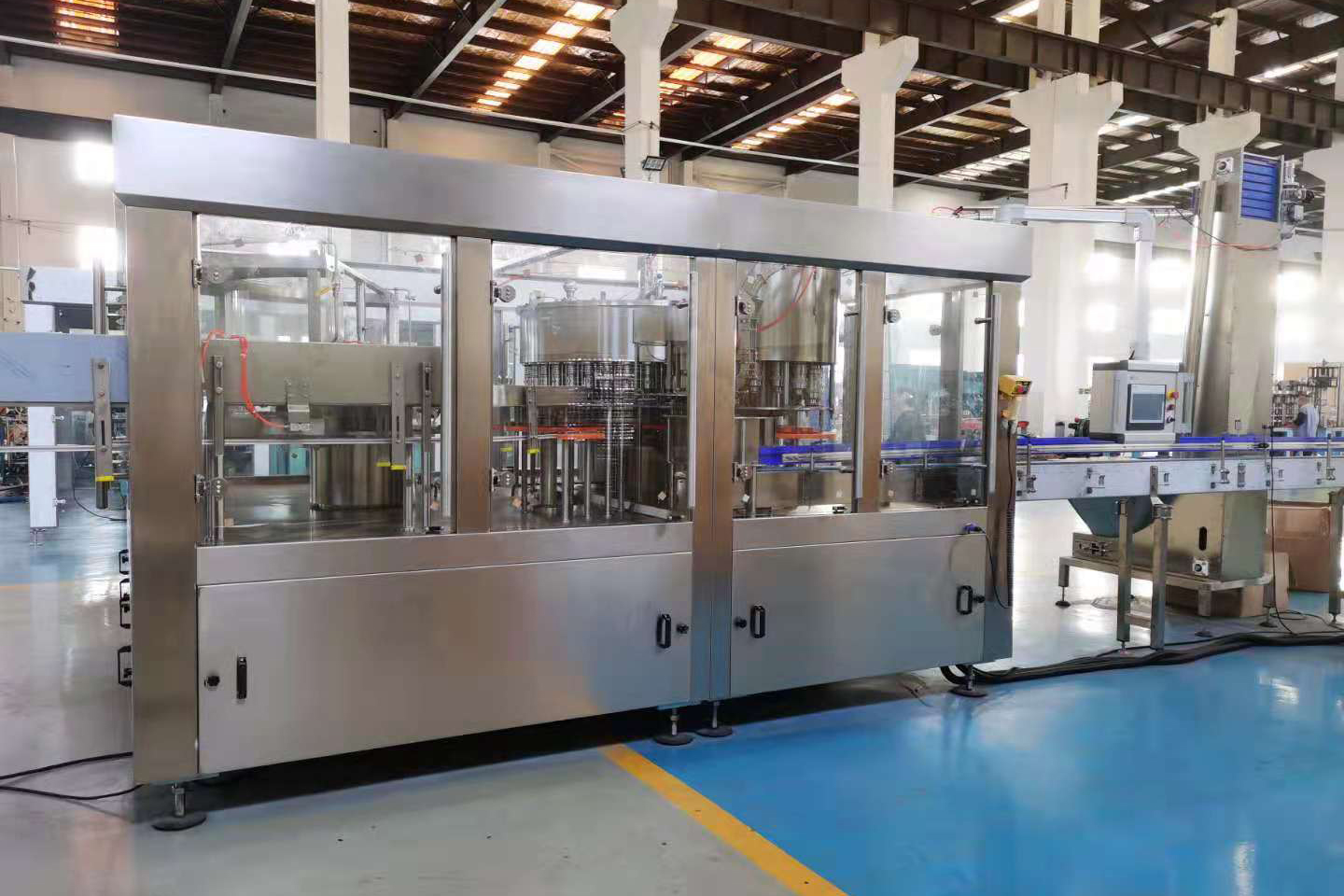
Designing an industrial bottle filling machine for continuous operation is not just about speed. It is about building a stable, hygienic, and serviceable system that can run shift after shift with predictable output, minimal downtime, and consistent fill accuracy. For bottled water applications, the engineering bar is even higher: the product is simple, but the expectations for cleanliness, uptime, and packaging quality are strict. This guide explains how to design a Water Filling Machine line that supports long-run production, reliable performance, and scalable growth.
What “continuous operation” really means in industrial filling
In real factories, “continuous operation” usually means the line can maintain target throughput for long periods (often 8–24 hours per day) while controlling:
Flow stability: fewer stop-start events that trigger spills, mis-caps, label misalignment, or bottle tipping.
Quality repeatability: consistent fill level/volume, consistent cap application, consistent reject logic.
Maintenance predictability: planned sanitation and wear-part replacement, not emergency stops.
Recoverability: when a station pauses, the line can buffer and restart without cascading jams.
So the design goal is not “fastest filler.” The goal is a balanced system where upstream and downstream stations are synchronized, and small disturbances do not become full-line stoppages.
Who this guide is for and what you should get from it
This article is written for plant engineers, production managers, OEM buyers, and integrators who need a practical roadmap for specifying or developing a continuous-run Water Filling Machine. By the end, you should be able to:
Choose an architecture (inline, rotary, or monoblock) based on speed, footprint, and reliability targets.
Understand core design decisions that impact uptime: infeed, bottle handling, filling method, capping, inspection, and buffering.
Build a specification that protects OEE and reduces downtime during sanitation and changeovers.
System-level architecture: the complete water bottling line
A continuous-operation industrial bottle filling machine is rarely a single machine. It is a line with “flow control” built into every section. A typical bottled water line includes:
Bottle infeed (unscrambler or depalletizer) and air-conveying or conveyor transport
Rinsing or container cleaning (depending on your hygiene strategy and bottle supply conditions)
Filling station (valves/nozzles + product distribution manifold)
Capping system (cap sorting, feeding, pick-and-place, torque or compression control)
In-line inspection (fill level/volume checks, cap presence, visual checks)
Labeling, coding (date/lot), and packaging
Accumulation tables or buffers (critical for continuous operation)
The “secret weapon” for continuous operation is buffering. Accumulation zones let upstream stations keep running when downstream stations pause briefly, preventing small interruptions from becoming full-line shutdowns.
Designing around bottled water: what makes it unique
Water is low viscosity and typically non-foaming compared with carbonated drinks, but it still presents challenges at high speed:
Splash control: At high throughput, turbulence and bottle vibration can cause splashing and wet conveyors, leading to label failures or microbial risk.
Fill-level appearance: Consumers expect uniform fill levels in clear bottles. Even small deviations can look “wrong.”
Hygiene expectation: Water lines often require hygienic design features (cleanability, drainability, minimized crevices) and disciplined sanitation procedures.
Packaging sensitivity: Lightweight PET bottles can deform, tip, or scuff easily—especially in transitions (star wheels, guide rails, corners).
In other words, the product seems simple, but the system has to be engineered for stability and cleanliness.
Filling technologies that fit Water Filling Machine applications
Choosing a filling method is a core design decision. Your choice impacts speed, precision, sanitation complexity, and maintenance.
Overflow or level filling
Overflow/level filling is commonly used where visual consistency matters. In principle, the system fills until a set level is reached (often via an overflow return path), producing uniform headspace appearance. For water lines, it can be attractive because it is relatively straightforward and supports stable cosmetic fill levels—especially in transparent bottles.
Volumetric filling
Volumetric filling targets a fixed volume per bottle. This can be implemented through timed flow, flowmeter-based control, piston systems (less common for high-speed water), or servo-controlled dispensing. Volumetric methods can be excellent when you need repeatable dosing and scalable recipes, and when you want the control system to manage volume with high transparency.
Net-weight filling
Net-weight strategies rely on weighing to confirm or control fill quantity. For pure water lines, net-weight is often used more as an in-line verification method than as the main filling principle, but it can be useful where compliance or premium quality control is needed.
How to decide: a practical selection checklist
Target speed: Higher speeds often push designs toward rotary/multi-head architectures.
Fill-level aesthetics: If shelf appearance is critical, level-focused methods may be preferred.
Recipe flexibility: If you run multiple bottle sizes frequently, choose a method and control system that supports fast recipe switching.
Sanitation goals: Hygienic cleanability and drainability must be engineered into valves, manifolds, and product paths.
Utilities and floor plan: Consider compressed air, water supply, drainage, and available footprint.
Rotary vs inline vs monoblock: architecture choices for continuous operation
The architecture of your industrial bottle filling machine is often the biggest determinant of continuous-run performance.
Inline filling systems
Inline systems typically process bottles in a line, with multiple filling heads arranged along the conveyor. They are valued for:
Flexible layout and easier access for maintenance
Simplified changeovers for certain bottle formats
Lower upfront complexity than high-speed rotary platforms
They can be an excellent choice for small to mid-capacity water plants, pilot lines, or facilities with space constraints. The trade-off is that ultra-high throughput becomes harder to achieve without extending machine length or increasing complexity.
Rotary filling systems
Rotary systems move bottles through a circular carousel with many stations, supporting high throughput with controlled motion and compact footprint. For continuous operation, rotary systems can offer:
High capacity with smooth bottle handling
Consistent timing across many stations
Efficient integration with rotary capping and rinsing modules
The trade-off is more complex mechanical timing, precision components, and a stronger requirement for skilled maintenance and spare parts strategy.
Monoblock integration
A monoblock integrates multiple functions—commonly rinse, fill, and cap—into one frame or tightly coupled system. This can reduce transfer points (where jams and tipping happen), shorten footprint, and improve line stability. For continuous operation, fewer transitions often equals fewer stoppages.
Mechanical design principles that protect uptime
To keep a Water Filling Machine running continuously, mechanical design must focus on stability, wear resistance, and rapid serviceability.
1) Bottle infeed and anti-jam geometry
Most downtime begins at the infeed. Design for smooth bottle presentation and controlled spacing. Key ideas include:
Consistent bottle pitch using timing screws or metering belts
Stable guide rails that prevent wobble for lightweight PET
Transitions that avoid sudden speed changes
Jam detection that triggers micro-stops before a full pile-up forms
2) Transfer mechanisms and gentle handling
If you use star wheels, neck-handling, or grippers, ensure the transfer path fits your bottle geometry and weight. Lightweight bottles require careful control of acceleration, alignment, and support points to prevent deformation and tipping—especially around corners or elevation changes.
3) Modularity for fast maintenance
Continuous operation depends on fast recovery. Build subassemblies so technicians can replace wear parts quickly:
Quick-change filling valves or nozzle banks
Tool-minimized access panels and swing-out guards
Standardized fasteners, seals, and O-rings across stations
Clear maintenance zones that do not require disassembling half the machine
4) Hygienic materials and cleanable surfaces
For a water line, hygienic design is not optional. Use corrosion-resistant materials (commonly food-grade stainless in wetted areas), avoid dead zones in product paths, and design surfaces for easy cleaning. Smooth finishes reduce residue retention and simplify sanitation.
Hygiene-first design: CIP-ready strategies for water lines
Even if your facility’s sanitation protocol varies, a continuous-run industrial bottle filling machine should be designed to support cleaning without extended downtime.
Drainability: Product paths should drain completely to prevent stagnant water in manifolds or valves.
Minimal dead legs: Short, direct piping paths and hygienic fittings reduce microbial risk.
Clean-in-place compatibility: The design should allow controlled circulation of cleaning solutions and rinse water through product-contact areas.
Isolation and protection: Protect open containers with appropriate hygienic enclosures or airflow strategies if required by your risk profile.
Continuous operation does not mean “never clean.” It means cleaning is planned, efficient, and engineered into the system so the line returns to stable output quickly.
Controls and automation architecture for continuous operation
A high-performing Water Filling Machine needs a control system that is practical for operators and diagnostic-friendly for engineers.
PLC/HMI design that reduces human error
Recipe management: Bottle size, fill targets, cap torque settings, conveyor speeds, and inspection thresholds saved as recipes.
Guided changeover: Step-by-step prompts that prevent incorrect setup.
Alarm rationalization: Clear root-cause messaging (what happened, where, what to do next) instead of generic faults.
Event logging: Time-stamped stops, micro-stops, and rejects to support continuous improvement.
Key sensors that protect uptime
Continuous operation requires early detection of drift and bottle flow issues. Common high-value sensors include:
Bottle presence and bottle jam detection
Cap presence, cap feed status, and capping head torque monitoring
Fill verification (level cameras or checkweighers, depending on your strategy)
Flow/pressure monitoring in product supply to detect unstable feed
Conveyor speed feedback and synchronized drives
Data-driven maintenance: from reactive to predictive
Modern filling lines increasingly use condition signals—cycle counts, motor current, vibration trends, and valve actuation statistics—to schedule maintenance before failures. Even without advanced AI systems, basic trend monitoring can meaningfully reduce unplanned downtime.
In-line quality assurance: build quality into the line
For bottled water, the most effective quality strategy is “verify during production,” not only at end-of-line sampling.
Fill checks: Detect underfill/overfill early to prevent large batches of rejects.
Cap checks: Verify presence and application quality to reduce leaks and contamination risks.
Vision inspection: Identify skewed caps, damaged bottles, and label defects before packaging.
Reject handling: Ensure rejected bottles exit cleanly without causing jams or conveyor contamination.
Engineering metrics to specify in your design requirements
To avoid vague expectations, define measurable targets for your industrial bottle filling machine. Consider including:
Throughput: bottles/minute and sustained bottles/hour at defined bottle sizes
Uptime target: OEE goal and allowed planned downtime for sanitation
Fill performance: acceptable tolerance range (volume or level), and verification method
Reject rate: acceptable percentage and reject categories
Changeover time: time to switch between bottle formats and cap types
MTTR: maximum target time to recover from common stoppages (cap feed issues, bottle jam, sensor faults)
These metrics transform “continuous operation” from a marketing phrase into an engineering deliverable.
Utilities and facility integration: designing the line to fit the plant
A Water Filling Machine cannot run continuously if the facility support systems are unstable. Build your layout and utilities plan around:
Compressed air quality: stable pressure and dry air for pneumatics and some cap feed systems
Electrical stability: correct voltage, protected circuits, and properly sized drives
Water supply and drainage: especially important for rinsing and sanitation
Footprint and access: service clearance for valve maintenance, capper access, and sanitation
Safety and guarding: interlocks, E-stops, and lockout/tagout-friendly design
Cost and scalability: design choices that protect future expansion
Many water plants grow faster than expected. A smart industrial bottle filling machine design supports scaling without rebuilding everything. Plan for:
Additional filling heads or upgraded capping modules
Expandable accumulation/buffer zones to stabilize flow
Automation upgrades (inspection stations, case packing, palletizing)
Recipe-based flexibility for new bottle sizes and cap styles
When you design for scalability early, the line can evolve from “meeting today’s volume” to “supporting tomorrow’s market” with fewer disruptions.
Commissioning and troubleshooting: how to reach stable continuous operation
Continuous operation is achieved during commissioning—not on paper. Use a staged ramp-up approach:
FAT mindset: validate mechanical alignment, safety interlocks, and basic recipe logic before shipment or installation completion.
SAT and ramp: increase speed in controlled steps, validating fill stability, cap quality, and reject logic at each stage.
Micro-stop hunting: track small recurring stops (cap feed hiccups, bottle scuffs, sensor noise) and eliminate them early.
Operator training: consistent operation prevents the “human causes downtime” pattern.
Common causes of instability in water lines include bottle tipping at transitions, cap feed interruptions, inconsistent product feed pressure, and over-sensitive detection timing. Solve these systematically with data logs and targeted mechanical adjustments.
FAQ: Industrial Bottle Filling Machine Design for Continuous Operation
What filling method is best for a Water Filling Machine?
It depends on your priorities. If you need highly uniform visual fill levels, a level-focused approach can be attractive. If you need recipe flexibility and transparent control logic, volumetric strategies are often preferred. The best method is the one that meets your speed, hygiene, and verification goals with the least operational complexity.
Rotary vs inline: which is better for continuous operation?
Rotary designs are typically preferred for high-speed continuous operation because they combine multi-station processing with smooth motion and compact footprint. Inline designs can be excellent for small to mid-capacity lines where flexibility, accessibility, and simpler maintenance are more important than maximum speed.
How do you reduce downtime in an industrial bottle filling machine?
Focus on infeed stability, buffering/accumulation, diagnostic-friendly controls, and modular maintenance. Most “mysterious downtime” is actually repeatable micro-stops caused by bottle handling, cap feeding, or sensor thresholds.
Which sensors are essential for continuous-operation water lines?
At minimum: bottle presence/jam detection, cap presence and capping quality monitoring, fill verification (level or weight checks), and stable conveyor speed feedback. If your plant targets high OEE, add trend monitoring to anticipate wear-related failures.
How do you design for sanitation without losing production time?
Engineer cleanability into the product-contact system: drainable manifolds, minimal dead zones, hygienic fittings, and access that does not require lengthy disassembly. Pair that with standardized sanitation procedures and planned cleaning windows to return quickly to stable output.
Bottom line: A continuous-operation industrial bottle filling machine is a system, not a single mechanism. When you align filling technology, bottle handling, hygiene design, automation, buffering, and measurable performance targets, your Water Filling Machine line can deliver stable throughput with predictable quality—shift after shift.

 English


