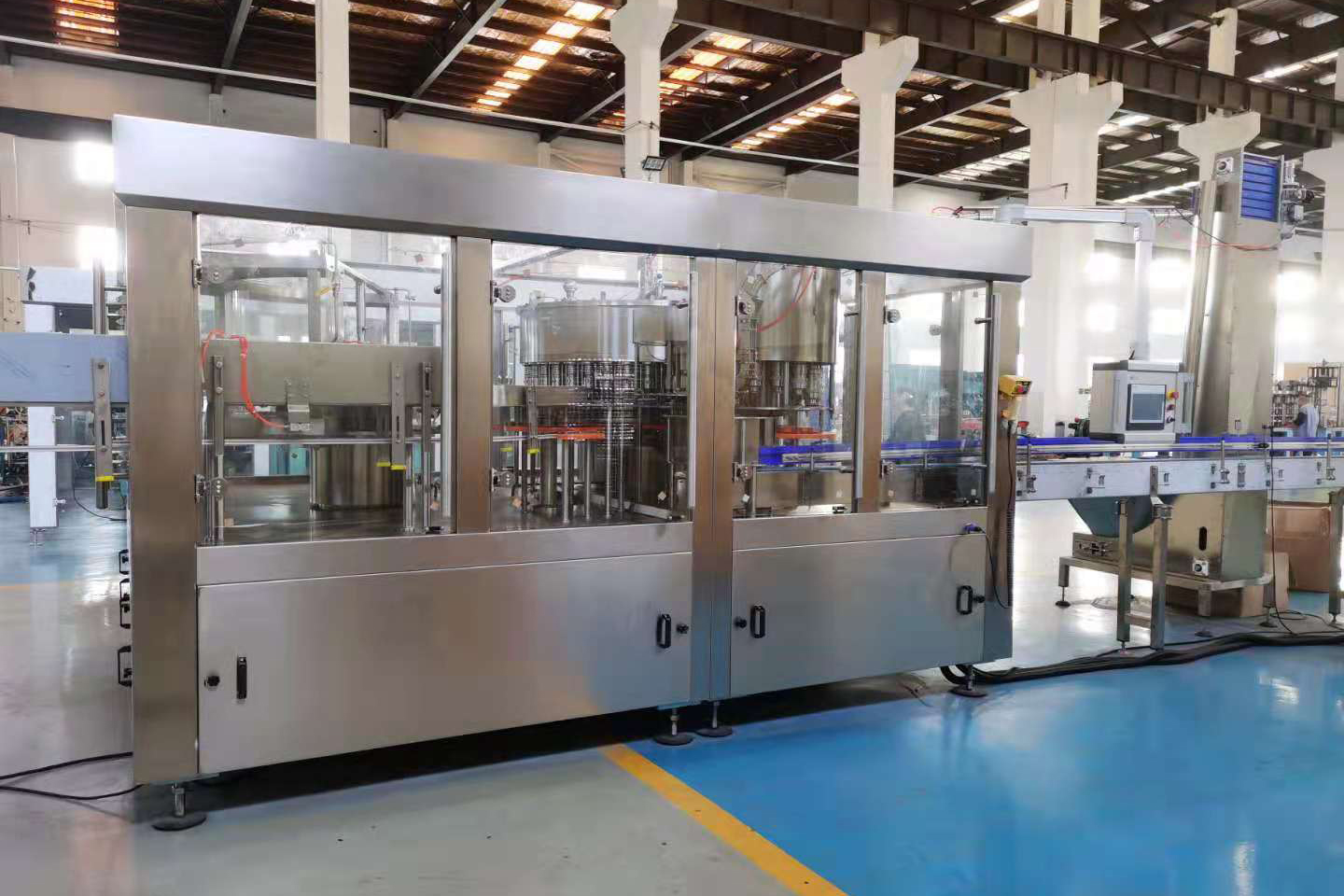
Why Carbonation Retention Is the Real Bottling KPI
When buyers search for a pet bottle beer filling machine, they’re rarely chasing “speed” alone. The real KPI is carbonation retention: keep CO₂ dissolved, control foam, protect aroma, and seal the package before gas has time to escape. In PET bottles, this challenge becomes even more sensitive because pressure drops, warm product, and turbulence can turn stable beer into foam and leave the finished bottle tasting flat.
This article explains the practical, production-ready mechanics behind carbonation-friendly filling—step by step—while also clarifying how a Water Filling Machine platform can be adapted for carbonated beer (and what must be redesigned to make it work).
Carbonation Basics for Bottling Teams (The Only Physics You Need)
Carbonated beer is a balance between:
Pressure: Higher pressure helps keep CO₂ dissolved in the liquid.
Temperature: Colder beer holds CO₂ better; warming encourages CO₂ breakout.
Agitation: Turbulence creates nucleation and foam, pushing CO₂ out of solution.
Time: The longer beer is exposed to low pressure or open air, the more CO₂ can escape.
In other words, carbonation is not “lost” in one dramatic moment—it leaks away through dozens of small process choices. A well-designed pet bottle beer filling machine simply reduces the number of opportunities for CO₂ to leave the product.
PET Bottles vs Glass and Cans: What Changes in Carbonation Control
PET is popular for cost, weight, and logistics—but it adds technical constraints that affect carbonation:
Pressure tolerance and dimensional consistency: Neck finish quality, bottle rigidity, and repeatable sealing surfaces matter more when filling under pressure.
Foam sensitivity: PET filling typically demands gentler flow profiles to avoid sudden foaming.
Process window becomes narrower: A few degrees warmer or a small pressure mismatch can trigger visible foam and CO₂ loss.
Because of these realities, PET beer lines commonly emphasize counter-pressure filling, stable pressurization, and fast, consistent capping. If your operation is transitioning from water or non-carbonated beverages, this is where the biggest engineering gap appears between a Water Filling Machine and a carbonation-capable beer filler.
How a pet bottle beer filling machine Preserves CO₂: The End-to-End Cycle
Carbonation-friendly PET beer filling is best understood as a controlled pressure story. The goal is to keep the bottle and product environment “comfortable” for dissolved CO₂ from the first second to the last.
1) Bottle Infeed and Positioning: Stable Handling Prevents Micro-Agitation
Before any gas or liquid enters the bottle, mechanical stability matters. Smooth bottle transfer, accurate centering, and vibration control reduce the small shocks that can trigger early foaming. On high-speed lines, even minor wobble can cause inconsistent sealing at the filling head—leading to pressure instability and carbonation loss.
2) CO₂ Purge: Remove Oxygen and Prepare a CO₂-Friendly Headspace
Many PET beer fillers use a CO₂ purge to displace air inside the bottle. This step supports quality in two ways:
Less oxygen pickup, which helps preserve flavor and shelf life.
A CO₂-rich internal environment, which reduces the driving force for CO₂ to escape from beer into an oxygen/air-filled headspace.
For buyers comparing systems, ask how the purge is implemented (single-stage vs multi-stage), how consistently it performs at speed, and how it integrates with pressure control.
3) Pressurization and Equalization: The Core of Counter-Pressure Filling
The “secret sauce” of carbonation retention is not mysterious—it’s pressure equalization. A pet bottle beer filling machine typically raises bottle pressure to match the filling environment before liquid enters. When the pressure difference is small, the beer enters calmly instead of flashing CO₂ into foam.
If you remember only one rule, make it this: large pressure drops create foam; stable pressure maintains carbonation.
4) Gentle Filling: Flow Profile Matters More Than People Expect
Once pressurized, the filler introduces beer with a controlled flow pattern designed to minimize turbulence. Carbonation-friendly designs aim for:
Low shear entry that avoids splashing.
Consistent fill speed without sudden surges.
Stable venting strategy so pressure doesn’t collapse during filling.
In PET beer bottling, “faster” is not always better. The best lines achieve high throughput by keeping the fill stable—then optimizing the rest of the system (handling, capping, automation), not by forcing aggressive liquid flow.
5) Controlled Depressurization and Fast Capping: Close the CO₂ Escape Window
After filling, the bottle must move from a pressurized filling state to a sealed package. If depressurization is uncontrolled or the capping window is too long, CO₂ can escape rapidly.
Carbonation-friendly systems often use a controlled pressure release (sometimes called “snifting”) followed by immediate, consistent capping. The operational goal is simple: minimize the time between stable pressure conditions and a reliable seal.
6) Seal Integrity and Inspection: Carbonation Can Be Lost After Filling
Even a perfect fill can be ruined by poor sealing. Cap application consistency, torque control, and neck finish compatibility determine whether CO₂ remains in the bottle during storage and distribution.
Modern lines may add inspection layers such as fill-level checks, cap presence verification, and leak-risk detection. These controls reduce customer complaints that look like “carbonation issues” but are actually packaging defects.
Where a Water Filling Machine Fits (and What Must Change)
A Water Filling Machine platform often provides strong fundamentals: hygienic design, reliable conveying, rinsing options, CIP-ready construction, and automation-friendly architecture. For non-carbonated beverages, these features can be enough.
For carbonated beer in PET, however, several elements must be fundamentally different:
Counter-pressure filling hardware (pressurization, equalization, controlled venting).
Gas management (CO₂ purge, pressure stabilization, consistent valves).
Foam and turbulence control (liquid path design and filling valve characteristics).
Synchronized high-speed capping to protect carbonation immediately after fill.
In short: a Water Filling Machine can be a great starting point for mechanical reliability, but it must evolve into a pressure-controlled system to become a true pet bottle beer filling machine.
The Four Engineering Levers That Decide Carbonation Outcome
1) Temperature Management: Keep Product Cold, Keep CO₂ In
Temperature is the easiest lever to understand and one of the hardest to maintain consistently. Warmer beer releases CO₂ more readily, which increases foam and reduces final carbonation. The best operations control temperature across the full route: holding tank, transfer lines, filler bowl, and the immediate filling environment.
2) Pressure Stability: Prevent Drops, Prevent Foam
Pressure instability is the hidden enemy of high-speed carbonation. If pressure varies between bottles or across a speed change, foam spikes appear—and CO₂ leaves the product. Look for systems that emphasize stable pressure control, consistent equalization, and predictable depressurization.
3) Flow Profile and Valve Design: Gentle In, Stable Throughout
Two lines can run at the same bottles-per-hour and produce very different results based on how the beer enters the bottle. A well-designed pet bottle beer filling machine uses valves and liquid pathways that reduce turbulence. This is especially important for PET, where agitation and pressure mismatch are more likely to show up as foaming.
4) Oxygen Control: Protect Flavor While Supporting Carbonation Retention
Oxygen pickup is primarily a quality and shelf-life problem, but it also affects the overall gas environment in the package. CO₂ purging and controlled filling environments reduce oxygen exposure and can support more consistent carbonation performance from the first bottle to the last.
High-Speed Stability: How Lines Keep CO₂ at Varying Speeds
One reason carbonation fails at scale is simple: production speed is rarely constant. Startups, micro-stops, changeovers, and upstream/downstream disturbances can force speed changes. These transitions can destabilize pressure and flow, triggering foam and CO₂ loss.
High-performance systems typically focus on:
Smooth acceleration and deceleration strategies to avoid sudden turbulence.
Coordinated station timing so pressurization, filling, venting, and capping remain synchronized as speed changes.
Closed-loop adjustments based on sensor feedback for pressure, temperature, and fill behavior.
This is where “precision automation” becomes a carbonation tool—not just a convenience feature.
Automation and Feedback Control: What to Monitor in Real Time
To keep carbonation stable, operators need to see and control the variables that cause loss. A modern filler can monitor and adjust:
Pressure trends during equalization and filling.
Temperature at key points (tank, lines, filler bowl).
Fill level consistency to reduce headspace variability.
Line speed and timing across filling and capping stations.
From an SEO and buyer perspective, the best question is not “Does it have PLC control?” but “What does the PLC actually control and how does it protect carbonation during real-world speed changes?”
Hygiene Without Downtime: CIP and Sanitation That Won’t Disrupt Carbonation Performance
Beer filling is not only about carbonation—it’s also about hygiene and consistent quality. CIP capability supports stable production by reducing contamination risk and preventing performance drift caused by residue or microbial buildup.
For PET beer fillers, sanitation should cover both the liquid side and any relevant gas-contact surfaces. A cleaner system typically runs more consistently, which indirectly supports stable pressure and fewer foam incidents.
Troubleshooting Carbonation Loss: A Practical Decision Tree
If your packaged beer is “flat,” don’t guess. Use a structured approach.
Symptom: Excessive Foam During Filling
Check product temperature (too warm increases CO₂ breakout).
Verify pressure equalization (mismatch triggers flashing and foam).
Inspect valve behavior (turbulence, surging, or inconsistent venting).
Review speed-change events (foam spikes often coincide with ramps).
Symptom: Bottles Taste Flat After Packaging
Check capping delay (CO₂ escapes quickly after depressurization).
Confirm controlled depressurization strategy (avoid rapid pressure collapse).
Verify purge effectiveness (air-filled headspace increases CO₂ loss drivers).
Symptom: Random Leakers or Inconsistent Carbonation in Storage
Inspect PET neck finish consistency and cap compatibility.
Check cap application torque and alignment stability.
Audit handling vibrations and bottle positioning at the capper.
Buyer’s Checklist: Choosing a PET Beer Filling Solution
Whether you’re upgrading from a Water Filling Machine or adding a dedicated beer line, use this checklist to avoid expensive surprises:
Counter-pressure capability: pressurization, equalization, controlled venting.
CO₂ management: purge method, pressure stability, gas consumption control.
Foam control by design: valve and flow profile engineered for carbonation.
High-speed coordination: stable performance during ramps, micro-stops, and restarts.
Packaging compatibility: PET neck finish requirements, cap type support, sealing repeatability.
Automation depth: what is monitored, what is controlled, and how alarms guide operators.
Sanitation: CIP-ready design that maintains consistent operation day after day.
If the supplier can clearly explain how their pet bottle beer filling machine protects carbonation across pressure, temperature, flow, and timing—then you’re evaluating a system built for beer, not merely adapted from water.
What Different Parties Say About Maintaining Carbonation
King Machine: Focuses on cold filling, pressure control aligned with CO₂ solubility principles, CO₂ purging, and stable counter-pressure filling with automation support.
Zenith: Emphasizes stability at varying speeds—smooth ramps, synchronized stations, and sensor-driven control to keep CO₂ behavior consistent during throughput changes.
Reliable Machinery: Highlights CO₂ purge and low-turbulence valve strategies, plus inspection and PLC/HMI control for repeatable filling quality.
Modern Machinery: Frames carbonation quality as the result of coordinated modules (conveying, filling, capping) supported by routine checks and maintenance discipline.
SinoPAK: Points to pressure and flow control as the foundation, reinforced by sensor-based flexibility for different carbonation requirements and bottle types.
FLSM: Distinguishes counter-pressure filling from gravity filling and presents equal-pressure filling as key to reducing foaming and carbonation loss, with monitoring for stability.
HomebrewTalk community: Notes commercial practice commonly carbonates beer in tanks and uses counter-pressure filling to retain carbonation during bottling.
LinkedIn Pulse: Describes counter-pressure nozzle sealing concepts, controlled flow patterns to reduce agitation, and integrated CIP considerations for production readiness.
FAQs
How does a pet bottle beer filling machine keep beer from going flat?
By controlling pressure (equalization and counter-pressure filling), keeping beer cold, minimizing turbulence, and capping quickly after a controlled pressure release—reducing the time and conditions that let CO₂ escape.
Can a Water Filling Machine be used for carbonated beer in PET?
A Water Filling Machine can share mechanical foundations, but it needs major upgrades for counter-pressure hardware, CO₂ management, foam control valve design, and synchronized capping to function as a true beer carbonation-preserving system.
Why does high-speed production often cause carbonation issues?
Because speed changes can disrupt pressure stability and timing between pressurization, filling, venting, and capping. Stable ramps and synchronized controls help maintain carbonation.
Is CO₂ purging really necessary for PET beer filling?
It’s commonly used because it reduces oxygen exposure and creates a CO₂-friendly headspace. Both effects support better packaged quality and more consistent carbonation performance.
What is the fastest way to improve carbonation retention without buying a new machine?
Start with temperature control, pressure equalization verification, and capping timing. Many “flat beer” cases come from warm product, pressure mismatch, or a long delay between fill and seal.

 English


